
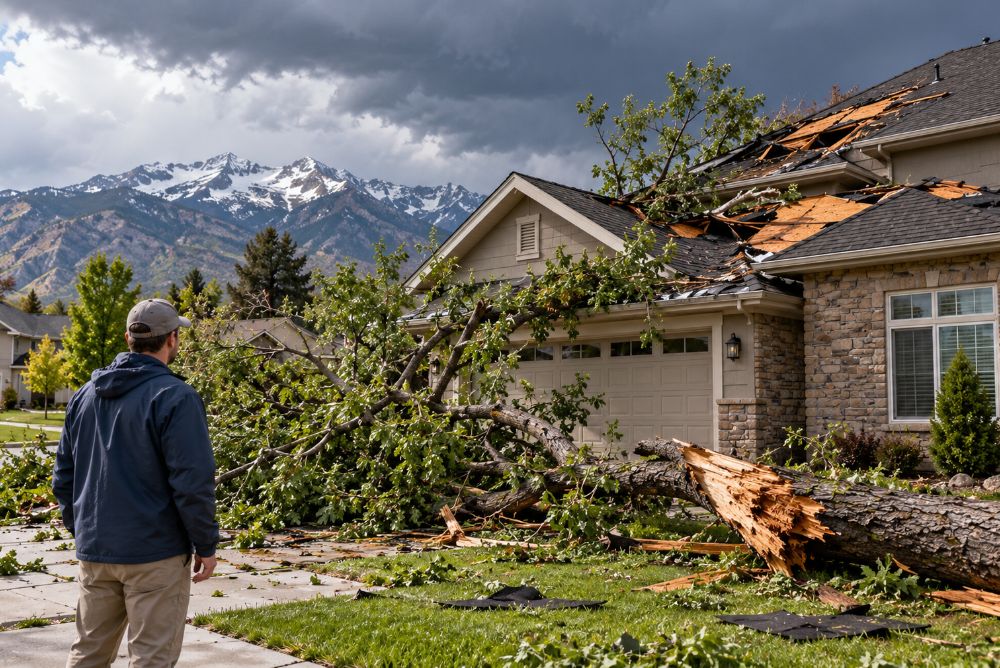
The most common types of storm damage in Utah are wind, hail, heavy rain and flooding, snow and ice, lightning, fallen trees and debris, and water intrusion through the roof, siding, or windows. Each one hits a home differently, and some leave almost no visible trace at first.
Utah weather swings fast. A calm summer afternoon along the Wasatch Front can turn into a thunderstorm with hail in minutes, and winter storms bring their own problems. Knowing what each type of damage looks like helps you catch it early, document it properly, and avoid repairs that cost far more later. In this post, we’ve covered 7 different types of storm damage every homeowner should know. Read on to know more.
7 Most Common Types of Storm Damage in Utah?
1. Wind Damage
Strong winds lift shingles, peel back flashing, and tear off siding, usually starting at the roof edges and corners. A few missing shingles may look minor, but they open a path for rain to reach the underlayment.
Common signs of wind damage to a roof include:
- Shingles that are creased, curled, or missing
- Siding panels pushed out of place or lying in the yard
- Loose or bent flashing around chimneys and vents
- Fence boards, patio covers, or garage doors that shifted
Garage doors deserve a second look. They are often the weakest opening on a house during a high-wind event.
2. Hail Damage
Hail damages roofing through repeated impacts that bruise shingles, knock off protective granules, and dent metal. Hail around one inch in diameter can do real harm, especially when wind pushes it sideways.
The tricky part is that hail damage often hides. A roof can look fine from the driveway while the shingle surface underneath is already weakened, and the leak may not show up for weeks or months. Dented gutters, dinged vents, and granules collecting at the base of downspouts are good clues that the roof took a hit too.
3. Heavy Rain and Flash Flooding
A fast, heavy downpour can overwhelm gutters, storm drains, and the soil around your foundation. When water has nowhere to go, it finds basements, window wells, and crawl spaces.
Flood damage in a home is serious because the water can carry contaminants from outside. Carpet, drywall, and insulation soak it up quickly, and a basement that sits wet for more than a day or two invites mold. Standard homeowners policies often treat flooding separately from other storm losses, so it helps to check your coverage before the season starts.
4. Snow and Ice Damage
Utah winters pile snow on roofs, and the weight adds up. Heavy, wet snow stresses roof framing, bends gutters, and can bring down overhanging branches.
Ice dams add another layer of trouble. Heat escaping from the attic melts snow near the roof peak, and that water refreezes at the cold eaves. The ice blocks drainage, and meltwater backs up under shingles and into the ceiling below. Winter storm damage often shows up as ceiling stains, peeling paint near exterior walls, or icicles hanging in thick, uneven rows.
5. Lightning Damage
Lightning can strike a roof, a tree beside the house, or a power line outside. The danger is not only fire. A surge can fry electronics, damage wiring, and cause electrical faults that stay hidden behind walls.
After a nearby strike, watch for scorch marks, burning smells, outlets that stop working, or appliances that act strangely. Lightning damage can start a slow-burning problem inside a wall, so any sign of heat or smoke deserves an immediate call to the fire department and a qualified electrician.
6. Fallen Trees and Flying Debris
Wind can turn branches, patio furniture, and loose building materials into projectiles. A single limb can puncture a roof, shatter a window, or crush a section of fence.
Debris damage is often the most dramatic type, but it is also one of the more preventable ones. Dead or overhanging branches near the roofline are the usual culprits. Once a tree breaks through, the opening needs to be covered quickly because rain follows many storms.
7. Water Intrusion and Hidden Moisture
This one is the quiet follow-up to nearly everything above. Damaged roofing, siding, windows, or flashing lets water into the structure, where it soaks insulation and framing without making noise.
Water intrusion leads to staining, warped drywall, musty odors, and eventually mold. Moisture left behind after a storm can start mold growth, which is why drying quickly matters as much as fixing the original damage.
How Can Utah Homeowners Identify and Prevent Storm Damage?
Most storm losses can be reduced with a little attention before and after severe weather. Think of it as two jobs: prevention before the season, and inspection after each storm.
Before storm season, work through this checklist:
- Inspect the roof : Look for cracked, curling, or missing shingles and gaps in flashing. If your roof is more than 15 years old, schedule a professional inspection.
- Clear the gutters: Clogged gutters push water onto siding and toward the foundation. Make sure downspouts carry water a few feet away from the house.
- Trim trees: Remove dead limbs and anything hanging over the roof or power lines.
- Test the sump pump: It is one of the most skipped tasks and one of the easiest. A battery backup helps if the power goes out.
- Check windows and doors: Worn weatherstripping and cracked caulk let wind-driven rain inside.
- Review your insurance: Confirm what your policy covers for wind, hail, and water, and ask about flood coverage separately.
After a storm, look for these warning signs:
- Granules in gutters or at downspout bases
- Dents in vents, gutters, or metal flashing
- New ceiling stains or damp spots on walls
- A musty smell in the basement or attic
- Warped trim, sagging gutters, or cracked window seals
A quick note on safety: stay off the roof. Hidden damage can weaken the surface, and a fall can be far worse than the storm. Look from the ground, take photos, and let a trained inspector handle the climb.
What Should You Do After Storm Damage to Your Utah Home?
The first hours matter. Acting in a clear order protects your family, your home, and your insurance claim.
- Put safety first: Stay away from downed power lines, unstable ceilings, and standing water near electrical outlets. If you smell gas or see sparks, leave the house and call emergency services.
- Stop further damage if it is safe: Cover broken windows or roof openings with a tarp or board. Shut off water if a pipe or ceiling is leaking.
- Document everything: Take photos and video of every damaged area, inside and out, before you move or clean anything. Date-stamped images help your claim.
- Call your insurance company: Report the loss early. Coverage depends on the type of storm damage and the terms of your policy, so ask what your plan includes.
- Call a restoration professional: A trained crew can assess visible and hidden damage, stabilize the property, and begin drying and repairs.
- Keep records: Save receipts for temporary repairs, hotel stays, and cleanup supplies.
Speed matters because wet materials start to break down fast. Mold can begin to develop when moisture lingers, so quick drying and cleanup protect both the structure and your air quality.
Bottom Line
Utah storms come in many forms, and each of the seven types covered here can damage a home in ways that are easy to miss. Prepare before the season, inspect after every storm, and act fast when something looks wrong.
If your home has taken a hit, Call UDK is available 24/7 for storm damage restoration across Utah.
Frequently Asked Questions
What are the most common types of storm damage in Utah?

The most common types are wind, hail, heavy rain and flooding, snow and ice, lightning, fallen trees and debris, and water intrusion. Roof damage often ties several of these together.
Can hail damage a roof without leaving visible signs?
Yes. Hail can bruise shingles and loosen granules while the roof still looks normal from the ground. Leaks may not appear for weeks or months.
Does homeowners insurance cover storm damage in Utah?
Coverage depends on your policy and the type of damage. Wind and hail are commonly covered, while flooding often requires separate coverage, so check your policy or ask your insurer.
What should I do first after a storm damages my home?
Make sure everyone is safe, stay away from electrical hazards and unstable areas, then photograph the damage and call your insurance company and a restoration professional.
Can storm damage lead to mold?
Yes. Water that enters through a damaged roof, window, or foundation can leave moisture behind, and mold can start growing if the area is not dried promptly.
How long does storm damage restoration take?
It depends on the extent of the damage, whether emergency stabilization is needed, and how much repair work follows. Minor repairs may take a few days, while major restoration takes longer.