
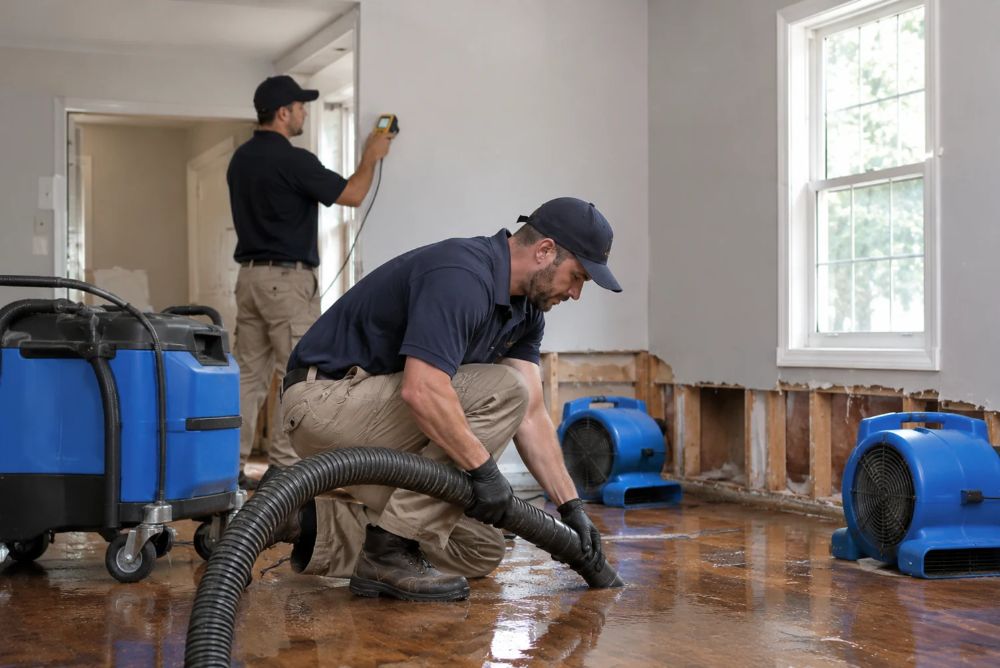
Water damage restoration isn’t simply about removing standing water. It includes inspection, extraction, drying affected materials, cleaning, sanitizing, and necessary repairs. Each step matters to prevent future problems (e.g., warped floors, damaged drywall, mould growing in hidden areas).
This guide explains the water damage restoration process, from your first call to the final repairs. It also covers how long restoration usually takes, what you can do while waiting for help, and how insurance may apply.
What Is Included in the Water Damage Restoration Process?
The water damage restoration process typically involves six main services: moisture detection, water extraction, structural drying, dehumidification, cleaning and sanitizing, and repairs. Restoration professionals follow these steps in order because each one prepares the property for the next.
For instance, a wall may feel dry on the outside but still hold moisture inside. Technicians use moisture meters to check these hidden areas and make sure the materials are completely dry before repairs begin. This helps prevent new paint or flooring from trapping moisture underneath.
Step-by-Step Guide to Water Damage Restoration
No two water damage jobs are exactly alike, but most restoration projects follow five main steps. Completing them in the right order helps avoid problems during the repair work.
Step 1: Inspection and Moisture Detection
First, you find the water source and determine how far the damage has spread. The techs will go floor by floor, wall by wall, and ceiling by ceiling, using moisture meters, since water can travel behind surfaces and remain completely hidden.
They also establish the type of water involved (clean water from a broken supply line, grey water from a washing machine, or black water from a sewage backup). Each requires different safety precautions and cleaning methods. The inspection findings are also recorded to support your insurance claim and determine the required work.
Step 2: Water Extraction
Removing standing water is the next priority, as the longer it sits, the deeper it penetrates the floor, walls, and other materials. The restoration team will use pumps and powerful extraction equipment to remove water from hard surfaces, carpets, and padding.
Getting most of the water out early also speeds up the drying process. Carpet padding is often removed after a flood because it absorbs and holds a huge amount of moisture. Removing it is necessary for the subfloor to dry properly. For more on how water extraction works, see UDK’s guide.
Step 3: Structural Drying and Dehumidification
Even after water extraction, moisture can still be trapped in the walls, subfloors, and wooden framing. The techs will use air movers and dehumidifiers to remove it.
Air movers will circulate air over the damp surfaces, and dehumidifiers will pull moisture out of the air. The team will check moisture levels regularly and adjust the equipment as required. Drying will take several days (depending on how much water has got into the property). The equipment will remain in place until the readings show that the affected materials have dried to an acceptable level.
Ending the drying process too soon can leave moisture behind and increase the risk of mold growth, sometimes weeks after the initial work appears complete.
Step 4: Cleaning and Sanitizing
After the affected materials have dried, the crew moves on to cleaning and sanitizing. Water can carry dirt and bacteria into a property, making this step especially important when dealing with gray or black water.
Technicians clean and disinfect hard surfaces, treat fabrics, and remove materials that cannot be safely restored, such as contaminated drywall or soaked insulation. Furniture, clothing, and other personal belongings may also require separate cleaning.
Proper cleaning removes lingering dirt and musty odors, making the affected space cleaner and more comfortable to use again.
Step 5: Repairs and Reconstruction
Once the property has been cleaned and dried, the final stage is repairing the damage. Depending on the extent of the problem, this may involve replacing drywall, repainting walls, installing new flooring, or rebuilding a damaged ceiling.
Smaller jobs can be done in a day, larger jobs take longer due to the need to source materials and do the actual installation. Ask any restoration company you’re considering whether they also do repairs and reconstruction. Having one company handle both repair and reconstruction can help minimize delays and make it easier to address problems as they arise.
How Long Does Water Damage Restoration Take?
The drying stage alone can take several days. When significant repairs are needed, the complete restoration may take a few weeks. The actual timeline depends on several factors:
- Amount of Water: A minor leak usually dries faster than a flooded basement.
- Time Before Response: Water that sits for a day or longer can soak further into building materials.
- Material Type: Hardwood, plaster, and thick carpet padding generally take longer to dry than tile or vinyl.
- Water Type: Contaminated water requires additional cleaning and material removal.
- Repair Scope: Replacing damaged flooring takes more time than repainting a wall.
How Call UDK Handles Water Damage Restoration in Utah
Call UDK follows a four-phase restoration approach, starting with your call to its 24/7 line at (801) 553-1010. The team assesses the damage, extracts standing water, dries the affected areas, and completes the necessary cleaning and repairs.
Call UDK offers water extraction, moisture detection, structural drying, dehumidification, sanitization, cleaning, and repair services for homes and businesses across Utah. Its offices are located in Draper, Layton, Park City, and Hurricane.
Bottom Line
A complete water damage restoration process involves inspection, water extraction, drying, dehumidification, cleaning, and repairs. Each stage helps protect your property. Acting quickly can prevent a manageable water problem from turning into a much larger repair job.
Hidden moisture, contaminated water, and incomplete drying are some of the main reasons water damage causes lasting problems. That is why each stage needs proper attention before the next one begins.
If water has entered your home or business, do not wait for everything to dry on its own. Contact Call UDK to have a restoration team assess the damage and get started.
Frequently Asked Questions
Does homeowners insurance cover water damage restoration?

Coverage depends on the cause of the damage and your policy terms. Sudden incidents (e.g., a burst pipe) are generally covered, whereas gradual leaks and flooding may not be.
Can I dry water damage myself?
You can generally handle small spills with towels and fans. Larger water losses, however, can leave moisture trapped within the walls and floors, areas that domestic equipment won’t be able to reach. Professional drying is the safer option in such circumstances.
How fast can mold grow after water damage?
Mold can start growing within 24 to 48 hours when conditions are damp. Quick water removal and proper drying help reduce the risk.
Who should I call first after water damage?
Call a restoration company first if water is still spreading, then contact your insurance carrier. Shut off the water source before help arrives if you can do it safely.