
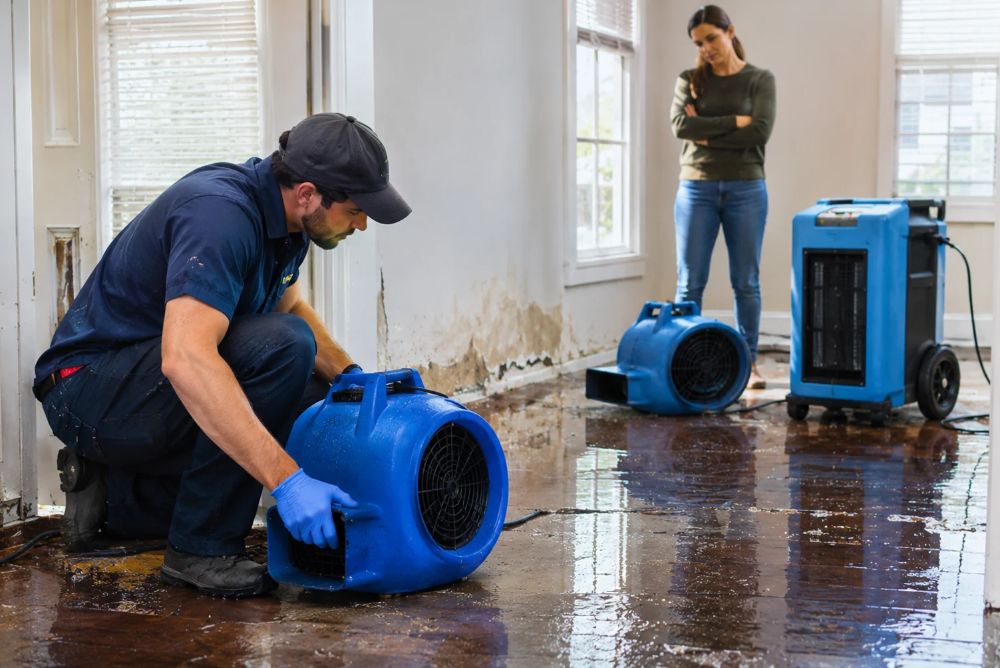
The first 24 hours after a leak, flood, or burst pipe can make a big difference in how much of your home you can save. Knowing what to do after water damage starts with making the area safe, stopping the water, taking photos of the damage, and getting professional help.
Water can penetrate drywall, subfloors, and insulation quickly. If you don’t clear the moisture, mold can start to grow in as little as 24 to 48 hours. Putting it off will also mean more work and more expensive repairs.
This guide covers what to do during the first day, which mistakes to avoid, and when to bring in a restoration team.
What to Do After Water Damage in the First 24 Hours
Follow these steps in order, and do not take chances with your safety.
Hour 0 to 1: Make the Property Safe
Before doing anything else, check the area for hazards. Standing water can pose an electrical hazard, so avoid flooded rooms if there are any outlets, cords, or appliances in or near the water. If you can reach the electrical panel without walking through water, switch off the power to that area. If you can’t, contact your utility company or an electrician.
Keep the kids and pets well clear of the wet areas. If you have to go into the area, wear rubber boots and gloves. If the water is from a toilet, a sewer line, or from outside flooding, then assume it’s contaminated and don’t touch it directly.
Hours 1 to 3: Stop the Water at the Source
Once it’s safe, try to establish where the water’s coming from and stop it. If a pipe has burst or an appliance line has failed, close the nearest shutoff valve or turn off the main water supply (usually in the basement, utility room, or near the water meter).
For a roof leak, put buckets under the dripping areas and move furniture or other belongings out of the way. If rain or flooding is causing the problem, focus on protecting the areas you can safely reach. Note when you first noticed the damage, as your insurer and restoration crew may ask for this information.
Hours 3 to 6: Document the Damage Before You Move Anything
Take clear photos and videos of all affected rooms before you start the clean-up. Include water marks on the walls, the damaged floor, wet furniture, and the area where the leak originated.
Make a list of the damaged goods, with their approximate age and value. Keep any purchase receipts you can. Don’t toss the damaged goods until your insurance adjuster has looked at them and/or given you the go-ahead to get rid of them.
Photos, videos, and an itemized list make it much easier to explain the extent of the damage when you’re dealing with a claim. Keep it all in one folder on your phone or in the cloud so you can access it when you need to.
Hours 6 to 12: Call Your Insurer and a Restoration Company
Contact your insurer as soon as possible to report the damage and find out what you need to do. The level of cover depends on the cause of the damage, so be as clear as you can about what happened. A sudden incident such as a burst pipe may be covered, whereas flooding and damage from a slow leak over time are often excluded. If in any doubt, check your policy or speak to your insurer/agent.
You should also contact a restoration company that offers 24/7 emergency service. Its crew can begin extracting water and setting up drying equipment while you work through the insurance process. Ask what records and documentation the company provides, as these can help your adjuster review the claim.
Hours 12 to 24: Protect Belongings and Prepare for Drying
While you wait for the restoration team, do everything you can to stop the damage from continuing. Move smaller items, rugs, and electronics to a dry area. Put some foil or plastic blocks underneath the furniture legs to stop the wet carpet from staining the wood.
Remove the loose area rugs, and leave the wall-to-wall carpeting and its padding for the professionals to handle. Open the windows, and use fans only when the outside air is dry and the water is clean. You can remove the shallow standing water yourself if it’s safe to do so.
Leave most of the drying work to the restoration professionals. Domestic fans won’t always reach moisture trapped inside walls and floors, so don’t assume an area is dry just because the surface is.
What Should You Avoid Doing After Water Damage?
Some cleanup methods may seem like a quick solution, but they can create additional problems. Keep these common mistakes in mind:
- Using a Household Vacuum on Water. This can damage the motor and create an electrical shock risk.
- Standing Under a Sagging Ceiling. Water trapped above the drywall adds weight and can cause it to collapse.
- Waiting for Everything to Dry Naturally. Moisture can remain inside walls and floors even when surfaces look dry.
- Painting or Covering Wet Materials. New paint or flooring can trap moisture and increase the risk of mold.
- Throwing Away Belongings Before Taking Photos. Doing so may leave you without the evidence needed for your insurance claim.
How Does Call UDK Help in the First 24 Hours?
Call UDK provides 24/7 emergency response for homes and businesses across Utah, with offices in Draper, Layton, Park City, and Hurricane. Its licensed, bonded, and insured team starts by assessing the damage, then moves to water extraction and structural drying with professional equipment.
Technicians also look for moisture in hidden areas, clean affected spaces, and handle repairs once the property is dry. UDK works with all insurance companies and provides documentation to help support your claim.
Bottom Line
What you do during the first 24 hours can affect the entire recovery process. Start by making the property safe, stopping the water, documenting the damage, and contacting your insurer and a restoration team. Knowing what to do after water damage can help prevent mold, warped floors, and more expensive repairs.
Do not leave the property to dry on its own and hope the problem goes away. If your Utah home needs professional water extraction and drying, request a callback to start the restoration process.
Frequently Asked Questions
How fast should I act after water damage?

Start taking safety measures immediately and try to have professionals on site within 24 hours. Mold can begin growing within 24 to 48 hours when moisture remains, so an early response helps limit further damage.
Should I turn off the power after water damage?
Yes, if you can reach the electrical panel without walking through water. Otherwise, contact an electrician or your utility provider.
Does homeowners insurance cover water damage?
Some policies cover sudden incidents, such as burst pipes, but flooding and long-term leaks are often excluded. Review your policy or contact your insurance agent.
Can I dry my home myself after water damage?
Small spills involving clean water on hard floors may be manageable. However, moisture inside walls, subfloors, and carpet padding usually requires professional drying equipment.
How long does water damage restoration take?
Water extraction and structural drying often take several days. Repairs and reconstruction can take longer, particularly when water has reached walls, floors, or other hidden areas.