
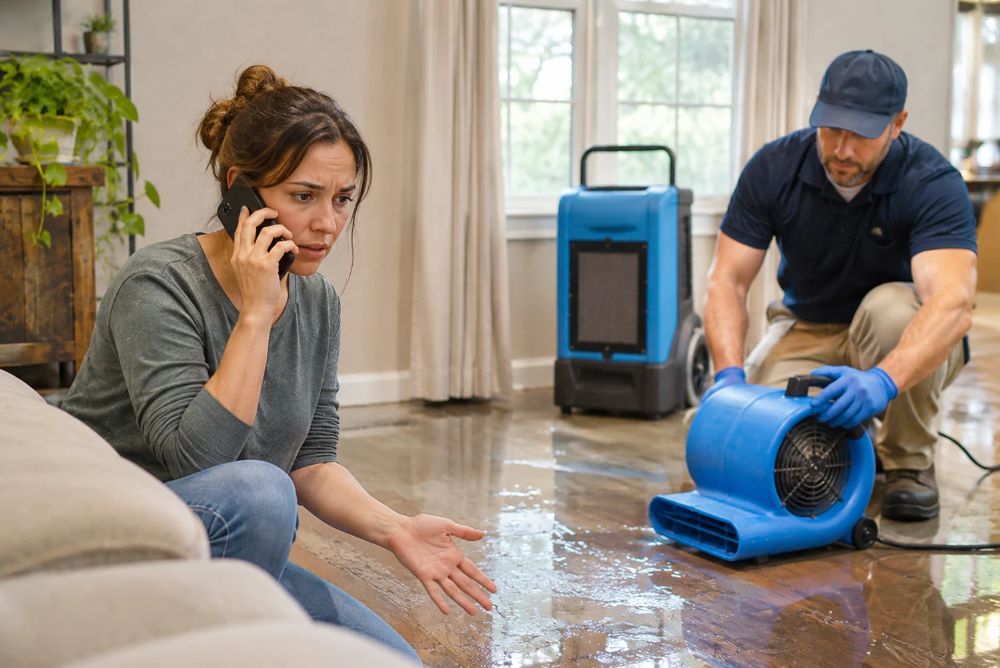
Call a professional when water has soaked into walls or floors, has been sitting for more than a day, or came from a sewer or outside source. Most homeowners can handle only small, fresh spills from a clean source.
This guide explains the water damage pro vs DIY decision in plain terms. You will learn how to size up the damage, what is safe to clean yourself, and what to do in the first hour while you wait for help.
How Can You Tell If You Have a Water Damage Emergency?
A water damage emergency is any leak or flood you cannot stop, contain, and dry within a few hours. Water spreads fast. It moves under flooring, behind baseboards, and into insulation where you cannot see it. Mold can develop within 24 to 48 hours, so waiting is risky. Watch for these signs:
- Water is still flowing. A burst pipe or failed water heater needs the source stopped first.
- Drywall, carpet pad, or subfloor is wet. These materials hold moisture long after the surface looks dry.
- A ceiling sags or bulges. Trapped water adds weight and can fall without warning.
- A musty smell appears. That odor often means moisture is hiding nearby.
Water Damage Pro vs DIY: A Quick Decision Guide
The right call depends on the source, the size, and the time. Use these two lists as a starting point.
When DIY Cleanup Makes Sense
DIY works for small, fresh, clean-water problems that you can dry completely within a day. Common examples include:
- A sink overflow that wet a small patch of tile or vinyl
- A leaky faucet or hose drip caught on a sealed surface
- Towels, rugs, and clothing you can wash and dry right away
Even then, use a wet/dry vacuum rated for water, wear rubber gloves and boots, and run fans only where the power is safe. Check the spot again after a day, because hidden dampness can return.
When You Should Call a Pro
Call a professional if any of these apply:
- Water soaked into drywall, carpet pad, insulation, or subfloor
- The water came from a sewer line, toilet backup, or outdoor flooding
- The area has been wet for more than 24 hours
- The damage covers more than one small room
- You see mold, warped flooring, or smell mustiness
- Outlets or electrical panels are near the water
Professionals bring extraction equipment, drying and dehumidification tools, and moisture monitoring that finds water behind walls.
Why Does the Source of the Water Matter?
Restoration crews sort water into three groups, and the group decides who should handle the job.
- Clean water comes from supply lines and sinks. Small amounts may be safe for DIY.
- Gray water comes from washing machines and dishwashers. It carries soap and bacteria, so gloves and caution are a must.
- Black water comes from sewage and floodwater. It is unsafe to touch and always needs a professional.
Clean water can also become contaminated if it sits. A spill that starts as a simple DIY job can turn into a bigger problem in a day or two.
What Should You Do in the First Hour Before Help Arrives?
These steps limit damage while you wait for a restoration crew:
- Shut off the main water valve if a pipe is leaking.
- Turn off power to wet areas at the breaker. Stay out if the panel is wet or you would have to stand in water to reach it.
- Photograph and video the damage before you move anything. This supports your insurance claim.
- Move furniture, electronics, and papers to a dry room.
- Call a restoration company and your insurer at the same time.
Skip heat guns and household vacuums. Both create safety risks around water.
What Goes Wrong When DIY Water Cleanup Falls Short?
The vast majority of the failed attempts at the water damage pro vs DIY argument are predicated on the fact that the surface may appear dry while the structure is still wet. Moisture will remain trapped in the drywall, the padding and the framing where you can’t see it or feel it. House fans will move the air but they won’t extract the moisture from the whole room.
Trapped moisture leads to mold, warped floors and odours that come back weeks later. A rushed clean up can also have the effect of undermining your insurance claim if the damage wasn’t properly documented. Getting a professional early will often mean that you don’t have to strip out as much.
How Does Call UDK Handle Water Damage Emergencies in Utah?
Call UDK has restored Utah properties since 1974 and runs emergency lines 24/7 from offices in Draper, Layton, Park City, and Hurricane. Our water damage restoration service follows four steps:
- You call, and the team dispatches.
- Technicians assess the affected areas and find the moisture.
- Crews remove standing water and dry hidden moisture with drying and dehumidification equipment.
- The team cleans and repairs the property after it is dry.
Call UDK also works with all insurance companies and helps document damage for your claim.
Bottom Line
The water damage pro vs DIY choice comes down to source, size, and time. Handle small, fresh, clean spills yourself. Call a professional for sewage, hidden moisture, standing water, or anything older than a day.
If you are unsure, treat it as an emergency. Call Call UDK or request a callback to get help any hour of the day.
Frequently Asked Questions
Can I clean up water damage myself?

Yes, if the water is clean, the area is small, and everything can dry within about 24 hours. Larger, older, or contaminated water damage should go to a professional.
How long do I have before mold starts?
Mold can begin to grow within 24 to 48 hours. Dry the area fast, and call a professional if drywall, padding, or flooring stays damp.
Does homeowners insurance cover water damage?
Most policies may cover sudden, accidental water damage, depending on the policy. Slow leaks are often treated differently. Document everything and contact your insurer early.
Should I turn off the power after a flood?
Switch off breakers for wet areas, but only if the panel is dry and you do not have to stand in water. Otherwise, call an electrician or the utility.
Can fans and a dehumidifier dry water damage on their own?
They help with small, surface-level moisture. They cannot reliably dry water trapped inside walls, subfloors, or insulation. If the area still feels damp after a day or two, or the smell lingers, call a professional to check for hidden moisture.