
7 Fire Damage Restoration Myths Debunked
Published
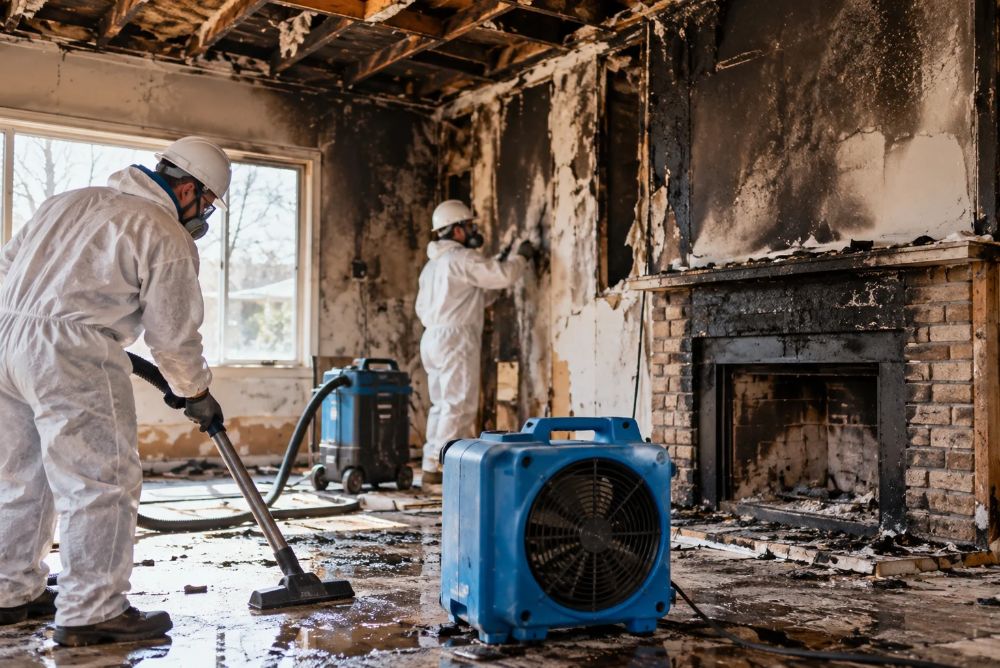
Fire damage restoration myths spread quickly because fire situations are stressful and people want quick answers, but acting on bad information can make the damage worse. Believing that a faint smoke smell will fade on its own, or that any contractor can handle fire cleanup, often leads to delays and costlier repairs later. This guide breaks down seven common myths and explains the facts behind each one.
Myth 1: If You Cannot See Damage, There Is None
Fire and smoke travel farther than most people expect, often reaching rooms that never saw flames. Smoke particles settle into walls, HVAC systems, and furniture well beyond the original fire source.
Fact: A professional inspection often reveals damage not visible during a basic walkthrough, especially soot residue and heat-related structural weakening.
Myth 2: A Little Smoke Smell Is Not a Big Deal
It is tempting to assume a faint smoky smell will fade on its own. In reality, that smell usually means smoke particles have embedded into porous materials like drywall, insulation, or fabric.
Fact: Persistent odor almost always requires specialized treatment like thermal fogging or ozone treatment, not just time and open windows.
Myth 3: Regular Household Cleaners Handle Soot Fine
Soot behaves differently than everyday dirt or grime, and treating it the same way often backfires. Standard cleaning products can grind soot particles deeper into surfaces instead of lifting them away.
Fact: Professional-grade cleaning agents are formulated to break down soot without spreading residue further into materials.
Myth 4: Homeowners Insurance Will Not Cover Fire Damage
Some homeowners assume filing a fire damage claim is a losing battle, so they hesitate to even try. That hesitation can unnecessarily delay the restoration process.
Fact: Most standard homeowners insurance policies cover fire damage, including structural repairs and smoke cleanup, though coverage specifics vary by policy.
Myth 5: Fire Damage Restoration Always Takes Months
Not every fire results in a lengthy, months long restoration process. Assuming the worst can add unnecessary stress before you even know the full scope of the damage.
Fact: Timelines vary based on severity. Minor smoke damage can often be resolved in days to a week, while major structural fires take considerably longer.
Myth 6: Firefighting Water Is Not a Real Concern
Once the fire is out, it is easy to focus only on burn damage and forget about the water used to extinguish it. That water does not simply disappear on its own.
Fact: Firefighting water needs the same extraction and drying process used in standard water damage restoration, or it can lead to mold within days.
Myth 7: Any General Contractor Can Handle Fire Restoration
A general contractor can rebuild a wall, but fire damage restoration involves more than construction work. It combines specialized cleaning, odor removal, and moisture control that general contracting alone does not cover.
Fact: Fire restoration specialists understand how soot, smoke, and water interact, which prevents costly mistakes a general contractor might miss.
Myth vs Fact Quick Reference
| Myth | Fact |
| No visible damage means no damage | Hidden smoke and soot damage is common beyond the fire source |
| Smoke smell fades on its own | Persistent odor usually needs specialized treatment |
| Household cleaners handle soot fine | Standard cleaners can spread soot deeper into materials |
| Insurance will not cover fire damage | Most policies cover fire damage, though details vary |
| Restoration always takes months | Timelines depend on severity, not a fixed duration |
| Firefighting water is not a concern | Leftover water requires proper extraction and drying |
| Any contractor can handle restoration | Fire restoration specialists prevent costly mistakes |
Why Do These Myths Matter?
Believing these myths does more than cause confusion. It can delay necessary steps, increase the risk of mold or structural issues, and affect how smoothly an insurance claim moves forward. Getting accurate information early protects both the property and the budget.
What Mistakes Do These Myths Lead To?
- Waiting too long to call a restoration company, assuming the damage is minor
- Attempting DIY soot cleanup that ends up spreading residue further
- Skipping professional water extraction after firefighting efforts
- Not filing an insurance claim because of assumptions about coverage
- Hiring a general contractor instead of a fire restoration specialist
Trusted Fire Damage Restoration Across Utah
For decades, UDK has helped homeowners and businesses across Draper, Layton, Park City, and Hurricane separate fact from fiction after a fire. Our fire damage restoration team provides honest assessments, not guesswork. You can view our service locations to see if we cover your area.
Now that these fire damage restoration myths are cleared up, you can make more informed decisions if your home ever faces fire damage. If you are dealing with fire damage, contact Call UDK for an honest assessment.
Frequently Asked Questions
Does opening windows really help remove smoke odor?

Fresh air helps somewhat, but it rarely eliminates odor embedded in walls, insulation, or fabric, which usually requires specialized treatment to fully resolve.
Is it true that fire restoration always requires moving out of the home?
Not always. Minor damage often lets homeowners stay, while significant structural or air-quality concerns typically require temporary relocation during repairs.
Can smoke damage affect areas the fire never reached?
Yes. Smoke travels through HVAC systems and open spaces, often affecting rooms far from where the fire started, even without visible flame damage.
Is it a myth that older homes are harder to restore after a fire?
Not entirely. Older homes can present unique challenges like outdated materials or wiring, though this depends more on construction type than age alone.
Do all fire restoration companies use the same cleaning methods?
No. Methods vary by company and certification level, which is why choosing an experienced, certified provider matters for getting the job done correctly.