
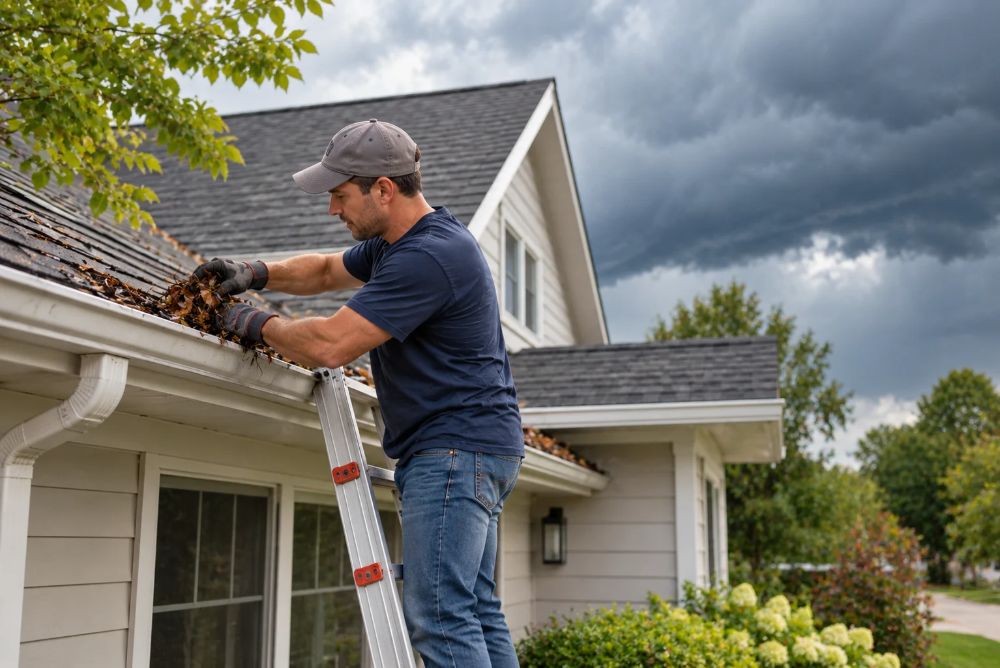
Learning how to prepare your home for storm season now means fewer surprises later and genuinely lowers the odds of costly damage when severe weather hits. Waiting until storm clouds roll in to think about your roof or gutters puts you a step behind. This guide walks through a practical checklist covering your roof, exterior, drainage, and emergency planning, so you can head into storm season with confidence.
What Should I Check on My Roof First?
Your roof takes the brunt of hail, wind, and heavy rain, making it the most important place to start. A few loose or damaged shingles can turn into a major leak once a real storm hits.
- Check for missing, cracked, or curling shingles
- Look for granule loss in gutters, which signals aging or storm-damaged shingles
- Inspect flashing around chimneys and vents for gaps or rust
- Schedule a professional inspection if your roof is more than 15 years old
If a past storm already left visible damage, our storm damage restoration team can assess whether repairs are needed before the next one hits.
How Do I Clear and Reinforce Gutters?
Clogged gutters send water pouring down your siding instead of away from your foundation, setting the stage for water damage during heavy storms.
- Clear leaves, debris, and nests from gutters and downspouts
- Confirm downspouts direct water at least a few feet from the foundation
- Check for loose or sagging gutter sections and reattach as needed
- Add gutter guards if your property sits near trees that shed heavily
Should I Trim Trees Before Storm Season?
Falling branches cause a surprising amount of storm damage every year, and it is one of the more preventable risks on this list. Trimming trees before storms significantly reduces both structural and yard damage.
- Trim dead or overhanging branches near the roof and power lines
- Remove any dead or diseased trees that could fall during high winds
- Secure or store outdoor furniture, grills, and decorations before a storm
- Check fences and outdoor structures for loose boards or weak points
How Do I Check Drainage and My Sump Pump?
Water pooling near your foundation is one of the fastest paths to basement flooding, especially during a heavy summer storm. Testing your sump pump before storm season confirms it will work when you need it most.
- Test your sump pump before storm season to confirm it works properly
- Consider a battery backup for your sump pump in case of power loss
- Grade soil around your foundation so water flows away from the house
- Clear storm drains near your property of leaves and debris
If your basement has flooded before, pairing sump pump maintenance with a look at your water damage restoration history can help identify recurring weak points.
How Should I Prepare Windows and Doors?
Wind-driven rain and debris can get in through weak seals or aging frames faster than most homeowners expect.
- Check weatherstripping and caulking around windows and doors
- Repair or replace cracked window panes before storm season begins
- Consider storm shutters or impact-resistant windows in high-risk areas
- Inspect garage doors, since they are often the weakest point in high winds
What Should Be in an Emergency Preparedness Kit?
Home prep matters, but having a family plan matters just as much once severe weather hits.
| Kit Item | Why It Matters |
| Flashlights and batteries | Power outages are common during storms |
| Bottled water and non-perishable food | Covers a few days if you cannot leave home |
| First aid supplies | Handles minor injuries without a hospital trip |
| Portable phone charger | Keeps communication open during outages |
| Copies of important documents | Protects insurance and identification paperwork |
What Should I Review in My Insurance Coverage?
Storm season is the right time to double-check what your policy actually covers before you need to file a claim.
- Confirm your policy covers wind, hail, and storm-related water damage
- Ask about flood coverage separately, since it is rarely included by default
- Take photos of your property now to document its pre-storm condition
- Keep your insurance provider’s contact information easy to find
What Mistakes Do Homeowners Commonly Make?
- Waiting until a storm warning to check the roof or gutters
- Ignoring small leaks or stains that suggest a bigger problem
- Forgetting to test the sump pump until water becomes an issue
- Skipping tree trimming near the house and power lines
- Assuming insurance automatically covers every type of storm damage
Trusted Storm Preparation Support Across Utah
Call UDK has helped homeowners across Draper, Layton, Park City, and Hurricane prepare for and recover from storm season for decades. Our team can assess vulnerable areas before severe weather hits or respond quickly afterward. You can view our service locations to see if we cover your area.
Preparing your home now protects your property and gives you real peace of mind when severe weather arrives. If you need an inspection beforehand or fast response after a storm, contact Call UDK to schedule an assessment.
Frequently Asked Questions
How far in advance should I prepare my home for storm season?

Starting at least a month before your region’s typical storm season gives you time to schedule inspections and repairs without rushing.
Does trimming trees really reduce storm damage risk?
Yes. Removing dead branches and weak limbs lowers the chance of falling debris damaging your roof, siding, or windows during high winds.
What is the most overlooked storm prep task?
Testing the sump pump is often skipped until water is already a problem, even though it is one of the simplest checks to do in advance.
Should I board up windows before every storm?
Boarding up is typically reserved for severe storm warnings, while standard weatherstripping and caulking maintenance covers most routine storms.
Can storm preparation lower my insurance costs?
Some insurers offer discounts for proactive measures like impact-resistant roofing or storm shutters, so it is worth asking your provider directly.