
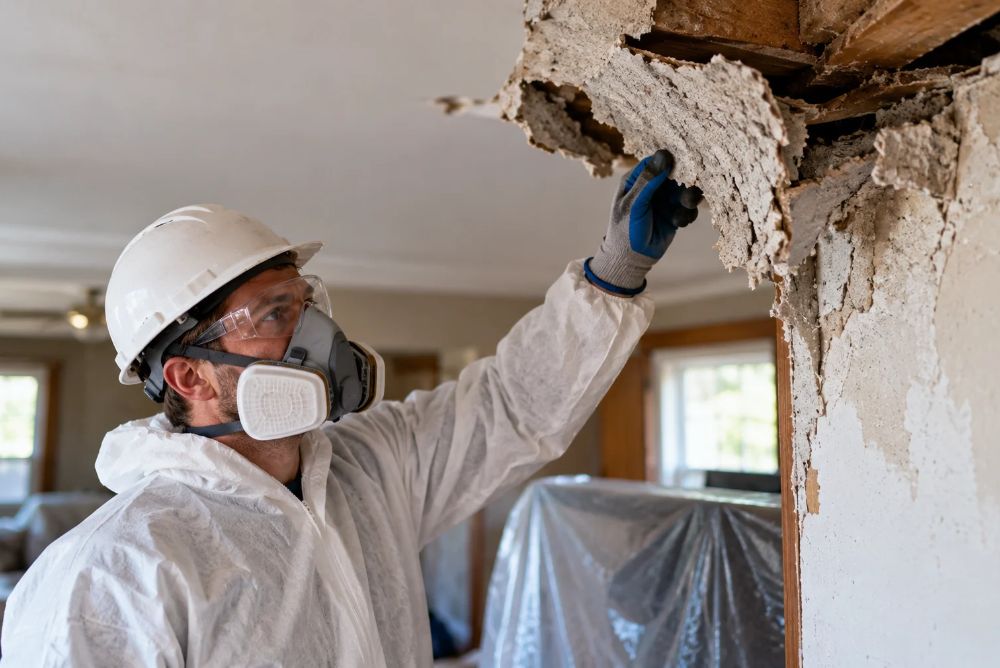
If you suspect asbestos in your home, leave it alone, keep people and pets away, and call an accredited professional before you cut, scrape, or sweep anything. Asbestos becomes a health risk when its fibers get into the air, and you breathe them in. That makes the first rule simple: do not disturb it.
The EPA also says the same thing: don’t panic, and don’t touch what you suspect contains asbestos. Intact material left alone usually stays put and does little harm. But here’s the thing: you cannot confirm asbestos by looking at a material because it can look like any other old tile or ceiling. Only proper testing can confirm it. In this post, we’ve covered the top 5 things you should never do if you suspect asbestos in your home until professionals arrive. Read on to learn more.
Things You Should Never Do If You Suspect Asbestos in Your Home!
Most asbestos problems get worse because of what a well-meaning homeowner does in the first hour. These five mistakes cause the most trouble.
Never Touch, Poke, or Disturb the Material
Curiosity is the first trap. Pressing on a crumbling ceiling patch or picking at an old floor tile can release asbestos fibers you cannot see or smell. The EPA warns that rubbing, hitting, or handling suspect material makes it riskier. Strong vibration or airflow can do the same.
- Keep kids and pets out of the area.
- Close the door and limit foot traffic.
- Turn off fans or vents that blow across the damaged spot.
Never Sweep, Dust, or Vacuum the Debris
Finding a pile of crumbled material feels like a cleanup job. It is not. Brooms and household vacuums stir fine fibers back into the air, and most vacuums let them pass right through the filter. The EPA lists sweeping, dusting, and vacuuming suspect debris as things to avoid. Leave it where it fell and let a trained team handle it.
Never Saw, Drill, Sand, or Scrape Suspect Materials
Remodeling is where most asbestos exposure at home actually happens. Pulling up old flooring, scraping a popcorn ceiling, or drilling into a wall can turn one small job into a house full of dust. The EPA also advises against abrasive pads or sanding on anything that may contain asbestos. If a renovation will disturb the material, pause the project first.
- Stop work the moment you spot suspect material.
- Cover nothing with plastic and walk away until a professional looks at it.
- Do not restart until you have test results.
Never Guess by Appearance or Skip Testing
Some owners assume an old material is harmless. Others assume it is dangerous and tear it out in panic. Both guesses can go wrong. Asbestos testing is the only reliable way to confirm what you have. It also protects you from paying for removal on materials that turn out to be clean. UDK coordinates testing before any abatement work begins for this reason.
The EPA adds a useful point: if materials are undamaged and will not be disturbed, you generally do not need to have your home tested. Testing matters most when you plan to remodel or the materials are damaged.
Never Try to Remove or Throw Away Asbestos Yourself
DIY removal is the costliest mistake. Without containment barriers, protective gear, and controlled disposal, you can spread fibers through ducts, carpets, and furniture. Asbestos waste also has handling rules. Bagging it and tossing it in the trash can carry asbestos into places it should never go. Proper asbestos removal is a job for trained and accredited professionals.
How Can Professional Asbestos Testing and Removal Protect Your Home?
Professionals do three things you cannot safely do on your own. They confirm what is in your walls, they keep fibers contained, and they clean up so the space is safe to use again.
UDK has restored more than 85,000 properties since 1974, and its asbestos process follows four clear phases.
- Contact: A team member is available 24/7 to talk through your concern, whether you found damaged material during a renovation or after storm or fire damage.
- Inspection and assessment: The crew evaluates affected areas, identifies suspected materials, and coordinates testing to confirm whether asbestos is actually present.
- Containment and removal: Work areas are sealed with containment barriers and negative air pressure equipment, which help keep fibers from reaching unaffected rooms. Workers remove materials with controlled procedures and bag waste for proper disposal.
- Cleaning and completion: After removal, the team cleans the work area thoroughly. A final inspection confirms the space is ready for the next stage of repair or renovation.
That sequence matters for a few practical reasons.
- Accurate answers: Testing replaces guesswork, so you only pay for asbestos abatement when it is truly needed.
- Contained work: Barriers and negative air pressure protect the rest of your home during removal.
- One team for the aftermath: UDK can also coordinate repairs such as flooring, drywall, or a larger rebuild once abatement is done.
- Insurance help: If asbestos was exposed by a covered loss like storm or fire damage, UDK works directly with insurance companies on the claim.
A quick note on what to do right now if you suspect asbestos in your home. Limit access to the area, avoid disturbing anything, and write down where the material is and what condition it is in. That information helps a professional assess the situation faster.
Protect Your Home by Contacting UDK
Suspected asbestos does not call for panic, but it does call for restraint. Do not touch it, sweep it, cut it, guess about it, or remove it yourself. Get it tested, and let trained professionals decide whether it should be left alone, repaired, or removed.
If you are in Utah, contact Call UDK today or visit our site for safe, professional asbestos inspection and removal, available 24/7.
Frequently Asked Questions
What should I do first if I suspect asbestos in my home?

Stop any work, keep everyone away from the area, and do not touch the material. Then call an accredited asbestos professional to assess it.
Is it safe to live in a house with asbestos?
It can be, if the material is intact, in good condition, and left undisturbed. The risk rises when it is damaged or disturbed, and fibers become airborne.
How can I tell if a material contains asbestos?
You cannot tell by looking at it. Only testing of a sample can confirm whether asbestos is present.
Do I need to test my home for asbestos?
The EPA says undamaged materials that won’t be disturbed generally do not need testing. Testing makes sense before a remodel or when materials are damaged.
Can I remove asbestos myself?
No. DIY removal can spread fibers through your home, so removal should be left to trained, accredited professionals.
What health problems can asbestos cause?
Inhaling asbestos fibers can lead to serious illnesses, including mesothelioma and lung cancer. Prevention depends on keeping fibers out of the air.