
Water damage restoration myths cost Utah homeowners real money, mostly because a wrong assumption delays the first phone call. A wall that feels dry, a stain you can paint over, or a policy nobody has read can turn a small leak into a major repair.
Here is the short answer. Water travels into drywall, insulation, and subfloors faster than it shows on the surface, and only proper drying stops the spread. This post separates fact from fiction using what we see in Utah homes: burst pipes in winter, failed water heaters, roof leaks after storms, and basements that take on water during spring snowmelt. Read on to learn more.
Top Myths Utah Homeowners Still Believe!
Here are the top water damage restoration myths homeowners still believe:
Myth 1: “If It Looks Dry, It Is Dry”
Fact: Moisture can stay hidden behind walls, under flooring, or inside ceilings for weeks or even months before obvious problems appear. Touch is not a reliable test. Our technicians use moisture meters and thermal imaging cameras to locate hidden water damage that you cannot see.
Watch for these early clues:
- A musty smell that does not go away after cleaning
- Bubbling paint or soft, swollen drywall
- Warped baseboards or buckling floors
- A water bill that climbs with no change in habits
Myth 2: “Fans and Open Windows Will Dry Everything”
Household fans move air across the surface. They do not pull moisture out of wall cavities, insulation, or the layers under your flooring. Dry Utah air will not reach water sealed inside a wall either.
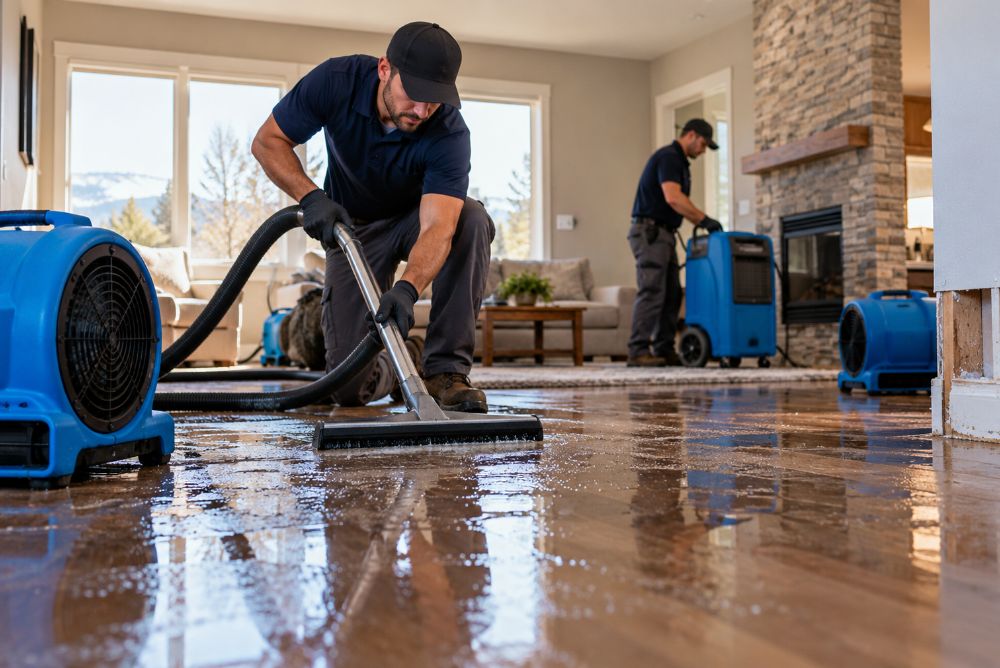
Professional structural drying uses air movers and dehumidifiers running around the clock. A certified technician takes moisture readings, checks in on a schedule, and adjusts the equipment until the numbers return to normal.
Myth 3: “Mold Takes Weeks to Show Up”
Mold does not wait. When moisture lingers after a flood or leak, mold growth can begin within 24 to 48 hours. It only needs moisture and something organic to feed on, such as drywall, carpet padding, or tile surfaces.
That is why fast water removal and complete drying matter so much. Dry materials leave mold with nothing to work with.
Myth 4: “A Fresh Coat of Paint Fixes a Water Stain”
Paint hides the surface and nothing more. If the leak behind it is still active or the wall is still wet, the brown ring returns, often with peeling paint and soft drywall beside it.
Real water damage repair starts with finding the source, drying the materials, and then replacing whatever cannot be saved. Cosmetic fixes come last, not first.
Myth 5: “Insurance Covers Every Water Loss” (Or None of It)
Both halves of this myth cause trouble. Insurance often covers water removal when the cause is sudden, such as a burst pipe. Flooding and long-term leaks usually aren’t covered unless you carry extra protection, and standard policies often exclude sewer backup as well.
Read your policy before you need it, and photograph everything after a loss. When you file a claim, our estimators work directly with your carrier to gather documentation. The property owner remains responsible for payment, and we collect your deductible.
Myth 6: “Drying Is Finished in a Day or Two”
Most properties take an average of 3 to 5 days to dry completely, depending on conditions. Equipment has to run without interruption, and technicians return to recheck readings. Jobs that need repairs or reconstruction run longer.
During that time, dehumidification does the heavy lifting. Air movers can be loud and windy, but staying in your home is generally safe unless your insurer, your restoration team, or your physician tells you otherwise.
Myth 7: “If the Water Looked Clean, Nothing Is Wrong”
Even when the source is fresh, many homeowners notice a strange smell after a loss. That odor comes from bacterial off-gassing in building materials, furniture, and old spills. It fades as humidity returns to normal, and antimicrobial treatment speeds that along.
Sewage backups and contaminated water are a different story. They need specialized water damage cleanup, because hazardous materials must be removed and every surface sanitized. Belongings that got wet can often be saved too, but only when someone acts quickly.
How Utah Homeowners Can Protect Their Homes After Water Damage
Utah homes face burst or leaking pipes, water heater failures, appliance leaks, roof leaks after storms, and basement seepage from poor drainage or rapid snowmelt. Once water arrives, the order of your next moves matters.
- Stop the source if it is safe – Shut off the main water valve for a pipe or appliance leak. If flooding is involved and it is safe, turn off the power.
- Stay out of contaminated water – Sewage and floodwater are not a DIY cleanup.
- Document everything – Take photos and video before you move anything.
- Move valuables out of the wet area – Only do this where it is safe.
- Leave suspected mold alone – Disturbing it can spread spores.
- Call a professional right away – Fast emergency water damage restoration limits damage and reduces your bill.
Bottom Line
Most water damage restoration myths share one flaw: they treat what you can see as the whole problem. Water hides, mold moves fast, and drying takes days, not hours. Homeowners who recover best act early, document the loss, and bring in trained help before moisture settles into the structure.
Water damage in your Utah home? Call UDK anytime to get started today.
Frequently Asked Questions
How long does it take for mold to grow after water damage?

Mold can begin growing within 24 to 48 hours when moisture stays in place after a flood or leak. Prompt water removal and complete drying lower that risk.
How long does water damage take to dry?
Most properties take an average of 3 to 5 days to dry completely. Larger losses and jobs that need repairs can take longer.
Does homeowners insurance cover water damage in Utah?
It often covers sudden losses such as a burst pipe. Flooding and long-term leaks usually are not covered without extra protection, so check your policy.
Is it safe to stay in my house while it dries?
Generally yes, unless your insurance company, restoration team, or physician advises otherwise. Air movers are noisy, but they are not a safety risk on their own.
Why does my house smell after water damage?
The smell comes from bacterial off-gassing in wet building materials, furniture, and old spills. It usually fades as humidity drops, and antimicrobial treatment helps.
What should I do first after a pipe bursts?
Shut off the main water valve if it is safe, take photos for your insurer, and call a professional restoration company right away.