
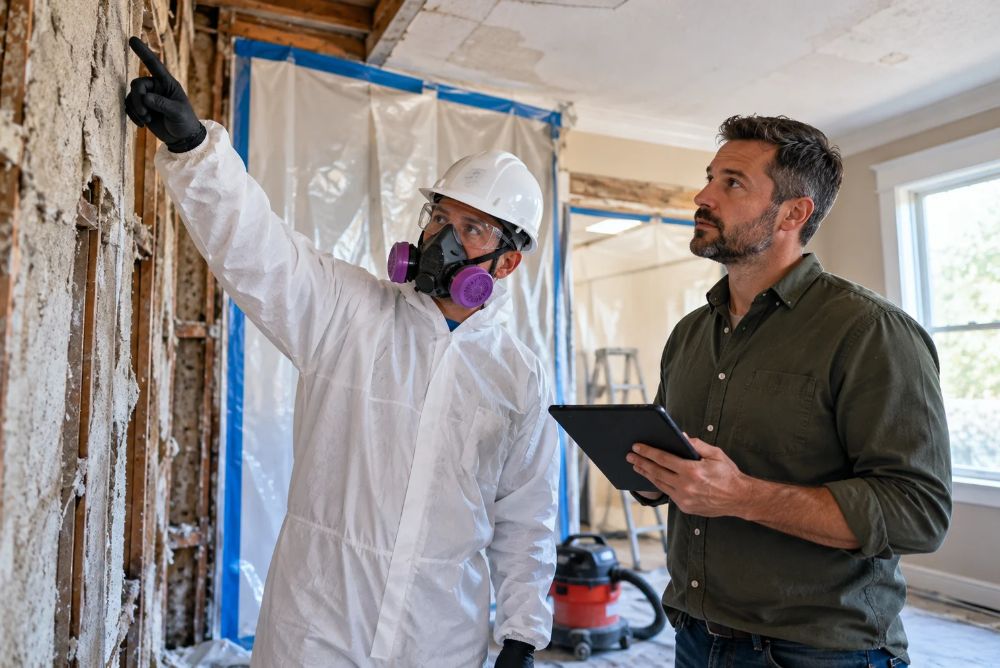
Before you hire an asbestos abatement contractor, ask six things: whether they are licensed and trained, how they confirm asbestos is present, how they contain the work area, how they handle waste, what insurance and paperwork they provide, and how they verify the space is clean afterward. A solid contractor answers each one plainly and in writing.
This matters because asbestos is not a surprise only to homeowners. Many properties built before the mid-1980s contain older materials such as insulation, flooring, ceiling materials, and siding that may include asbestos. You cannot spot it by looking, and disturbing it during a renovation, repair, or disaster cleanup can create a serious health risk.
Asbestos-related illnesses often take decades to show up, so a rushed or sloppy job can cause harm long after the work is done. These questions help you separate careful professionals from risky shortcuts.
Questions to Ask an Asbestos Abatement Contractor Before You Hire
Here are the top questions to ask when you hire Asbestos contractors:
Are You Licensed, Certified, and Trained for Asbestos Work?
Start with credentials. Ask to see current licenses and certifications, and confirm that the crew on your job holds them, not just the office staff.
Good answers sound specific. Look for:
- Current state and federal compliance for asbestos work.
- Trained supervisors and technicians on every job.
- Proof the company is licensed, bonded, and insured.
- A track record you can verify, such as years in business and project volume.
A company that dodges this question has already told you what you need to know.
How Do You Confirm Asbestos Is Actually Present?
Appearance alone cannot tell you whether a material contains asbestos. The only reliable method is sampling and asbestos testing at an accredited laboratory.
Ask who collects the samples, which lab analyzes them, and when you will get results in writing. Testing first also protects your wallet. It helps you avoid paying for abatement on materials that turn out to be unaffected.
How Will You Contain the Work Area?
Containment is where good abatement separates itself from a risky removal. Fibers that escape into clean parts of your property are the whole problem.
A careful contractor should explain how they will:
- Seal off the work area with containment barriers.
- Run negative air pressure equipment so air flows into the work zone, not out of it.
- Control foot traffic and equipment movement to prevent cross-contamination.
- Protect your HVAC system and nearby rooms.
If the plan sounds like “we’ll be careful,” keep looking.
How Do You Handle and Dispose of Asbestos Waste?
Removal is only half the job. Waste has to be bagged, handled, and disposed of according to proper handling requirements, not tossed in a regular dumpster.
Ask where the waste goes and what documentation you will receive. A reputable crew treats disposal records as part of the deliverable, because they protect you if anyone asks questions later.
What Insurance, Estimates, and Paperwork Will I Get?
Request a written scope of work before anything starts. It should name the materials, the areas, the method, and the price, so you can compare bids fairly.
Also ask about insurance coverage on both sides. First, confirm the contractor carries proper liability coverage. Second, if your asbestos issue came from storm or fire damage, ask whether they work directly with your carrier and handle claim documentation. That support can keep a stressful situation from becoming a paperwork maze.
How Will You Clean Up and Verify the Space Is Safe?
The finish line is not “the material is gone.” It is a thorough cleaning of the work area and a final inspection confirming the space is ready for the next phase.
Ask what the closeout process includes, whether final air testing is part of it, and what happens if the results come back wrong. Then ask what comes next. Abatement is often one piece of a bigger project, so it helps to know whether the contractor can coordinate post-abatement repairs such as drywall, flooring, or a larger rebuild.
How Do You Choose the Right Asbestos Abatement Contractor for Your Home?
Asking the questions is step one. Weighing the answers is step two. These factors carry the most weight:
- Experience you can verify – Decades in business and thousands of completed projects mean the crew has seen your situation before.
- Clear, written communication – Vague verbal promises are a red flag. A detailed scope and timeline are not.
- Response time – Asbestos exposed by a flood, fire, or storm cannot wait. A 24/7 emergency response matters when materials are already disturbed.
- Reputation – Read recent reviews and check for an A+ Better Business Bureau rating and industry credentials such as IICRC.
- One team for the full job – Fewer handoffs between abatement and repairs means fewer delays and fewer gaps in accountability.
Watch for warning signs too. A price far below every other bid, a contractor who skips testing, or anyone who suggests you “just scrape it yourself” should send you straight to the next name on your list.
Finally, compare at least two or three written estimates side by side. The cheapest option rarely includes containment, disposal paperwork, and cleanup.
Bottom Line
Hiring an asbestos abatement contractor is first a safety decision and second a pricing decision. Confirm their credentials, testing process, containment plan, waste handling, insurance, and cleanup verification before you sign, and get every answer in writing.
If a contractor answers all six questions clearly, you are likely in good hands. If any answer feels slippery, trust that instinct and keep looking. Need asbestos help in Utah? Utah Disaster Kleenup offers asbestos removal services with 24/7 response, so call (801) 553-1010 anytime.
Frequently Asked Questions
How do I know if my home has asbestos?

You can’t tell by sight. Materials in older homes, especially those built before the mid-1980s, need sampling and testing by an accredited lab to confirm.
What is the difference between asbestos abatement and asbestos removal?
Removal takes the material out of the property. Abatement is the broader term for reducing the hazard and can include removal, sealing, or enclosing the material.
Can I remove asbestos myself?
It is not recommended. Disturbing asbestos-containing materials can release fibers into your home, so professionals with containment and proper disposal should handle it.
Do I need asbestos testing before a renovation?
Yes, in practice. Evaluate suspected asbestos-containing materials before renovation, demolition, or restoration work disturbs them.
How much does asbestos abatement cost?
Cost depends on the size of the area, the type of material, and how accessible it is. A written estimate after an inspection is the only reliable number.
Will insurance cover asbestos removal?
Sometimes, particularly when asbestos is exposed by covered damage such as fire or storm. Check your policy and ask your contractor whether they work directly with insurers.