
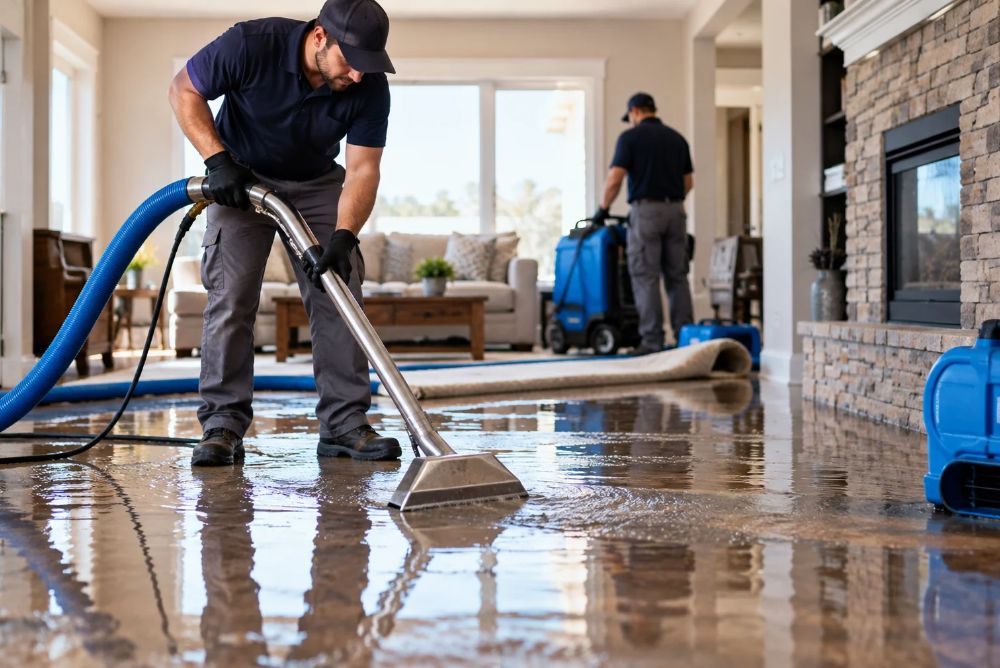
Water damage restoration in Utah typically costs between $500 and $3,000 for most residential projects. The final bill depends on the damage severity. That range is a good starting point for water extraction costs in most Utah homes. Small clean-water leaks land at the bottom of it. Sewage backups and widespread flooding can blow past it.
Speed matters as much as price. Mold can start growing within 24 to 48 hours of a flood, so waiting to compare quotes can cost you more than it saves. In this blog post, we cover the price ranges for water extraction services, the factors that drive them, and top questions that separate a solid contractor from a risky one. Read on to learn more.
How Much Does Water Extraction Cost in Utah?
Most water damage restoration projects in the Salt Lake City area run between $1,200 and $5,000 when you include both extraction and drying. Extraction alone is the cheaper slice of that bill.
Here is how published estimates break down:
- Minor clean-water extraction and drying: about $500 to $1,500.
- Extraction priced by area: roughly $11 to $19 per square foot in Utah cities such as Midvale, Tooele, and Eagle Mountain.
- Flood cleanup of a 215-square-foot space in Tooele: about $3,200 to $3,700.
- Sewage or black-water loss with extensive restoration: $10,000 and up.
Use these figures for budgeting, not for bargaining. A basement with two inches of clean water from a supply line and a basement with a sewer backup can sit on the same street and carry very different prices.
Insurance changes the math as well. Water removal is often covered when the cause is sudden, like a burst pipe. Flooding and long-term leaks usually are not covered unless you carry extra protection, so read your policy before you call.
What Factors Affect the Cost of Water Extraction?
Think of a quote as a recipe. Each ingredient below pushes the total up or down.
- Water category – Clean water from a supply line costs the least. Gray water from a washing machine or dishwasher needs more care. Black water from sewage or floodwater needs protective gear, disposal, and disinfection.
- Size of the affected area – A soaked bathroom is a different job than a flooded basement. More square footage means more labor, more equipment, and more drying time.
- How long the water sat – Water spreads into drywall, subfloors, and carpet pad fast. Every hour of delay gives it more material to soak.
- Materials involved – Carpet pad often has to go. Hardwood can cup and buckle. Wet insulation holds moisture for weeks if it stays in the wall.
- Drying time- Most properties take about 3 to 5 days to dry completely. Longer drying means more days of equipment on site.
- Hidden moisture – Water travels behind baseboards and under cabinets. Moisture meters find it. Guessing does not.
- Repairs after cleanup – Extraction is only the first line item. Drywall, flooring, and paint come after the structure is dry.
- Insurance coverage – Water removal from a sudden event like a burst pipe is often covered, while flooding and long-term leaks usually aren’t, unless you have extra protection. Check your policy early.
How to Choose the Right Water Extraction Company?
A low quote means little if the crew arrives late or skips the drying. We suggest asking these six questions before you sign anything.
- Are your technicians certified, licensed, and insured? Ask for proof and look for IICRC certification, the industry standard for water damage work.
- Will you test for asbestos before demolition if my home is older? A good contractor evaluates suspected materials and coordinates lab testing before work begins. That avoids unnecessary abatement on materials that turn out to be clean.
- How will you contain the work area and handle waste? Listen for containment barriers, negative air pressure, and a clear plan for disposal. Vague answers are a warning sign.
- What is in the written scope, and what could change the price? You want line items for extraction, drying, cleanup, and repairs, plus a plain explanation of what would trigger a change.
- How will you monitor drying, and for how long? The answer should include moisture readings, scheduled check-ins, and equipment adjustments, not just fans left running.
- Will you work directly with my insurance company? A contractor who documents the loss for your adjuster saves you hours of phone calls and helps your claim hold together.
Two more things are worth checking. First, confirm they answer the phone 24/7, because water doesn’t wait for business hours. Second, ask how close their nearest crew is to your address, since a faster arrival means less water damage to pay for.
Bottom Line
Water extraction in Utah typically costs between $500, and $5,000, with contaminated water, hidden moisture, and asbestos pushing it higher. The best way to keep the bill down is to call fast, ask direct questions and get the scope in writing.
If your home is older, add asbestos testing to the list before any demolition begins. It is a small step that protects your family and your budget. Contact Call UDK any time, day or night, for a free assessment of your water damage.
Frequently Asked Questions
How much does water extraction cost in Utah?

Most Utah homeowners pay about $1,200 to $5,000, with minor clean-water jobs starting near $500. Severe contamination can exceed $10,000.
How much does water extraction cost per square foot?
Published Utah estimates run about $11 to $19 per square foot, depending on the city and water type. Larger or contaminated areas cost more.
Does homeowners insurance pay for water extraction?
Often yes, if the cause is sudden, like a burst pipe. Flooding and long-term leaks usually need extra coverage, so check your policy.
How long does it take to dry a home after water extraction?
Most properties take about 3 to 5 days to dry fully. Larger or more complex losses can take longer.
How soon should I call for water extraction?
Call right away. Mold can begin growing within 24 to 48 hours after water exposure.
Can I remove standing water myself?
A wet vac can handle a small clean-water spill. For anything larger or contaminated, you’ll need professional extraction and moisture detection to prevent hidden damage.