
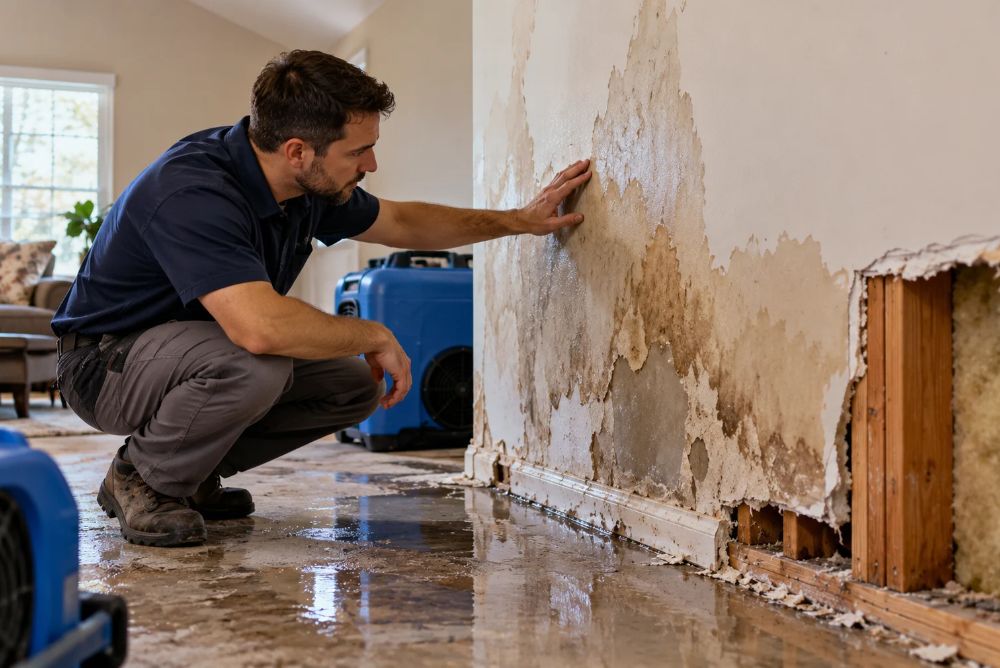
Drywall can stay wet for about 24 to 48 hours before mold becomes a real risk. After that window, the odds of saving it drop fast. Gypsum boards soak up water easily and hold it for a long time, so a wall that looks dry on the surface can stay damp inside for days. In this post, we cover how long wet drywall can wait, what determines whether you can save it, and what to do in the first hours. Read on to learn more.
How Long Can Drywall Stay Wet Before It Needs to Be Replaced?
The short answer is 24 to 48 hours. That is the usual window before mold spores find enough moisture to take hold. The paper facing on drywall is made of cellulose, which is food for mold. Add moisture, a warm room, and no airflow, and growth can start quickly.
Here is a simple timeline we use as a rule of thumb:
- 0 to 24 hours: The best chance to save the wall. Fast water removal and drying equipment can often stop damage from spreading.
- 24 to 48 hours: A narrowing window. Mold may begin, so moisture readings matter more than how the wall looks.
- 48 to 72 hours: Replacement becomes the safer call, especially if the wall stayed saturated.
- Beyond 72 hours: Expect mold, softening, and swelling. Removal is the usual path.
A few signs tell you the wall is past saving, no matter how many hours have passed:
- The board feels soft, crumbly, or spongy.
- Panels are bowing, sagging, or bubbling.
- You see fuzzy spots or dark staining.
- A musty smell lingers after the room dries out.
One more point that surprises people: dried drywall won’t always return to its original shape or strength. A wall can feel dry to the touch and still be weakened or hiding moisture in the cavity behind it.
What Factors Determine Whether Wet Drywall Can Be Saved?
Time is only one part of the picture. Restoration crews consider several factors before deciding whether to dry a wall in place or cut it out.
The type of water
Water from a clean source, like a broken supply line, gives you the best odds. Drywall touched by gray water (from a washing machine or dishwasher) is riskier. Drywall touched by black water (sewage or floodwater) should be removed, even if it was wet for only a short time. Contaminated water carries bacteria that drying cannot fix.
How much water the wall absorbed
A splash or a brief drip is very different from a wall that sat in standing water. When the board is fully saturated, the gypsum core breaks down, and the panel loses its strength. Partial dampness near the baseboard may be dried in place. A soaked panel usually cannot.
How fast drying starts
Airflow, dehumidifiers, and professional drying equipment make a large difference in the first day. Opening a wall cavity to let air reach the inside can save a wall that would otherwise stay wet in the middle.
What is behind the wall
Insulation holds moisture for a very long time and loses its insulating value once it gets wet. If the insulation is soaked, you generally have to remove it, and the drywall in front of it often goes with it.
Whether mold is already present
If you can see mold, remove the affected drywall. Mold can also grow on the back of a panel and on studs before it ever shows on the front, which is why a moisture meter and a hands-on inspection matter more than a quick look.
The type of board
Moisture-resistant drywall, often green or blue, handles humidity better. It isn’t waterproof, though, and it still fails during a leak or flood. Do not count on it to save a wall after a real water event.
What Should You Do When Drywall Gets Wet?
Speed matters more than perfection here. These steps, done in order, give the wall its best chance:
- Stop the water source – Shut off the main valve or fix the leak first. Drying a wall that keeps getting wet is a waste of effort.
- Stay safe – Turn off power to the affected area if water is near outlets or fixtures. A sagging ceiling can drop without warning, so keep out from under it.
- Remove standing water and wet items – Soak up what you can, and move furniture and rugs away from the walls.
- Start airflow – Run fans and a dehumidifier, and open windows if the weather allows. Keep the room moving.
- Check moisture, not just appearance – A non-penetrating moisture meter shows what your eyes cannot. Gently pressing a screwdriver into the board can also reveal softness.
- Look inside the wall –Professionals often cut small inspection holes or remove the lower section of board. When wet boards and insulation are found, a common practice is to cut about two feet above the water line.
- Test before you cut in older homes – Houses built before 1980 may contain asbestos in joint compound or other materials. Testing first keeps dust and fibers from spreading.
- Photograph everything – Pictures of the damage, the source, and the work done will help your insurance claim.
- Call a restoration professional – If the wall has been wet for more than a day, the water was not clean, or you see mold, bring in a certified team. Cutting into moldy drywall without containment can spread spores through the home.
When to skip DIY completely
Call for help right away if the water came from a sewer backup, a large area is affected, a ceiling is sagging, or anyone in the home has asthma or allergies. Those situations carry health and safety risks that a fan and a towel cannot solve.
Bottom Line
Wet drywall is a race against the clock. The 24- to 48-hour window is real, and the type of water, the level of saturation, and the speed of drying determine the rest. When the board is soft, moldy, or soaked with contaminated water, replacement is the safer choice. If the water was clean and the response was fast, you can dry in place.
If you are not sure which side your wall is on, a moisture reading and a professional inspection will give you a clear answer before small damage becomes a bigger repair. Contact Call UDK for 24/7 water damage restoration services.
Frequently Asked Questions
How long can drywall stay wet before mold grows?

Mold can begin growing on wet drywall within 24 to 48 hours. Warm, humid, poorly ventilated spaces speed it up.
Can wet drywall dry out on its own?
Sometimes, if the wetting was minor and caught early. Larger leaks usually leave moisture trapped inside the wall, so drying equipment or opening the wall is often needed.
Do I have to replace drywall that got wet?
Not always. Drywall briefly exposed to clean water can often be dried and saved, but replace soft, warped, moldy, or contaminated boards.
How do I know if drywall is wet inside the wall?
A moisture meter is the most reliable tool. Soft spots, staining, bubbling paint, and a musty smell are also warning signs.
How long does wet drywall take to dry?
It depends on the amount of water, airflow, and humidity. With proper equipment, many walls dry in a few days, while untreated walls can stay damp much longer.
Is wet drywall dangerous to leave in place?
Yes. Leaving it can cause mold growth, weaken walls, and reduce indoor air quality, so it is best to act within the first two days.