
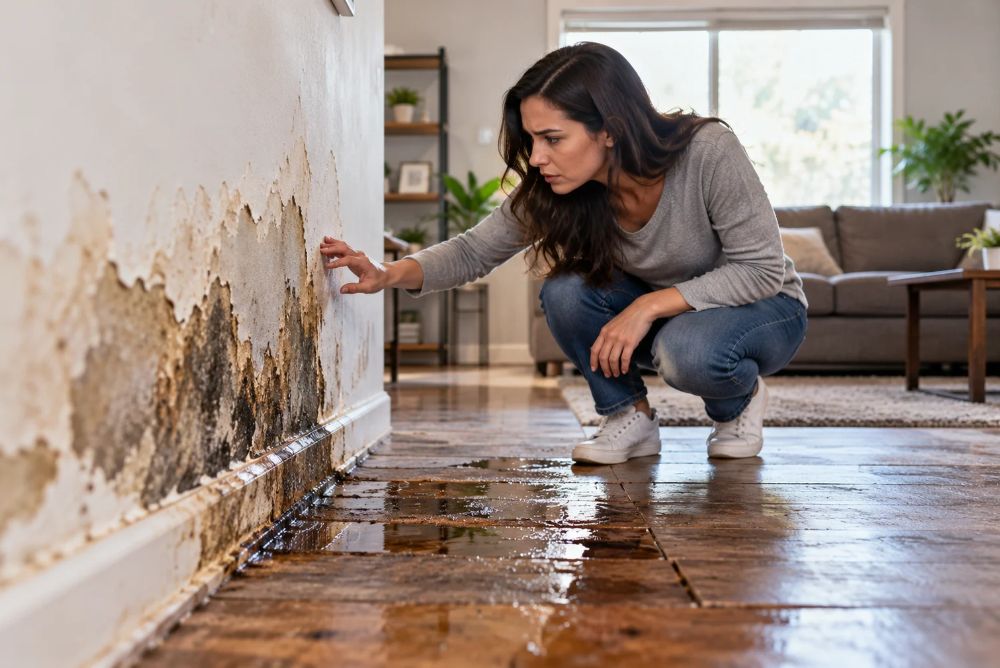
Your water damage restoration was probably done wrong if the property still smells musty, feels damp, or shows new stains after the crew leaves. A job is only finished when every wet material is dry, and that takes measured proof, not a quick look.
We have spent decades walking into homes where a first cleanup missed something. The problem is rarely visible on day one. Water hides in drywall, subfloors, and insulation, and it keeps causing damage long after the surface looks fine. The EPA advises drying wet materials within 24 to 48 hours to prevent mold. Skip that window or only partially dry, and a small leak becomes a hidden moisture problem. Here is how to spot it.
Signs Your Water Damage Restoration Wasn’t Done Properly
A Musty Smell That Won’t Leave
A faint damp odor can fade as humidity drops. If it lasts for weeks or gets stronger on humid days, that’s different. It usually means moisture is still trapped somewhere you can’t see. Check closets, cabinets, and rooms next to the original loss. A lingering musty odor is often the first clue that drying was incomplete.
Mold or Dark Spots Appear on Surfaces
Excess moisture can start mold growth in as little as 24 to 48 hours. If dark, fuzzy, or slimy patches appear on baseboards, ceilings, or the lower part of walls after restoration, the area wasn’t fully dried. Look at the corners first. Mold often starts where air barely moves.
Walls, Floors, or Carpet Still Feel Damp
Touch tells you a lot. Walls that feel cool or clammy, carpet that stays soft underfoot, or flooring that feels slightly tacky all point to leftover moisture. Professionals use moisture meters and thermal imaging to confirm it. Your hand is a rough check, but a meter is the real test of structural drying.
Floors Are Warping, Cupping, or Buckling
Hardwood and laminate swell as they absorb water. Boards that cup at the edges, lift off the subfloor, or leave gaps between planks mean water reached the material and stayed. Swollen baseboards, doors that suddenly stick, and trim pulling away from walls tell the same story. This damage can show up days after the crew packed up.
Stains, Bubbling Paint, or Peeling Wallpaper
Brown rings on a ceiling, bubbling paint, or wallpaper that peels at the seams all mean moisture is moving through the material. A stain that was painted over and then returns is a classic sign. Fresh paint over damp drywall only hides the problem for a while. The moisture will find its way back to the surface.
The Drying Equipment Left Too Early
Most properties need about 3 to 5 days to dry completely, though it depends on the materials and conditions. If they removed air movers and dehumidifiers after a day or two, that is a red flag. A proper job includes follow-up visits, moisture readings at each stop, and equipment adjustments. If nobody came back to check, nobody confirmed the property was dry.
No Moisture Logs, Photos, or Sanitizing Records
Good restoration leaves a paper trail. You should have starting moisture readings, daily progress notes, final dry readings, and photos of the work.
If the water was contaminated, such as a sewage backup, you should also see proof of cleaning and antimicrobial treatment. Sewage is classified as black water, the most contaminated category, and it needs specialized handling. Missing records also make it harder to support insurance claims for water damage.
What Should You Do If Your Water Damage Restoration Wasn’t Done Properly?
Acting quickly matters, because moisture and mold only grow with time. Here is a practical order of steps:
- Document what you see. Take dated photos and videos of stains, warping, and any visible mold. Write down smells and when you first noticed them.
- Gather your paperwork. Pull the invoice, scope of work, drying logs, and any insurance claim details.
- Contact the original contractor. Share your photos and ask for a written explanation of the drying plan and final readings.
- Request an independent inspection. A certified restoration team can check wall cavities and subfloors with a moisture meter and thermal camera.
- Notify your insurance carrier. Hidden or ongoing damage may need to be reported under your existing claim.
- Hold off on cosmetic repairs. Do not repaint, re-carpet, or install new flooring until a professional confirms everything is dry.
- Limit time in affected rooms. Mold exposure can trigger symptoms in people with allergies, asthma, or other respiratory conditions. If anyone has symptoms, talk to a qualified medical professional.
A reputable firm follows industry standards such as the IICRC S500 guidelines for water damage restoration. These standards call for assessment, extraction, controlled drying, and verification. If one of those steps was skipped, you have a clear reason to ask for the work to be redone.
Bottom Line
Water damage restoration is complete only when moisture readings prove it. A smell, a stain, a soft floor, or missing paperwork usually means someone skipped a step. Do not wait for it to get worse. Document the problem, get an independent inspection, and fix the drying before any repairs or paint go on top. If you notice any of these signs, contact Call UDK for 24/7 water damage restoration across Utah.
Frequently Asked Questions
How do I know if water damage was not fully dried?

Look for a musty odor, damp-feeling walls or floors, warping, and returning stains. A moisture meter reading is the only reliable way to confirm.
How long does water damage restoration take to dry?
Most properties take about 3 to 5 days to dry completely. Larger losses or hidden moisture can take longer.
Can mold grow after professional water damage restoration?
Yes, if materials were not dried fully. Mold can begin growing within 24 to 48 hours of moisture exposure.
What is the most common mistake in water damage restoration?
Removing drying equipment too soon without verifying moisture levels. Skipping follow-up readings is a close second.
Will insurance cover water damage that was not fixed properly?
It depends on your policy and the cause of the loss. Report ongoing damage to your carrier promptly and share your documentation.
Can I ask a different company to inspect a previous restoration job?
Yes. A certified restoration company can inspect for hidden moisture and tell you what was missed.