
One of the most stressful experiences that any business owner or homeowner can face is a fire.
Flames cause immediate, visible damage, but the damage they leave behind isn’t limited to what was burned. Smoke, soot, and harmful residues can continue to impact a property even after the fire has been put out.
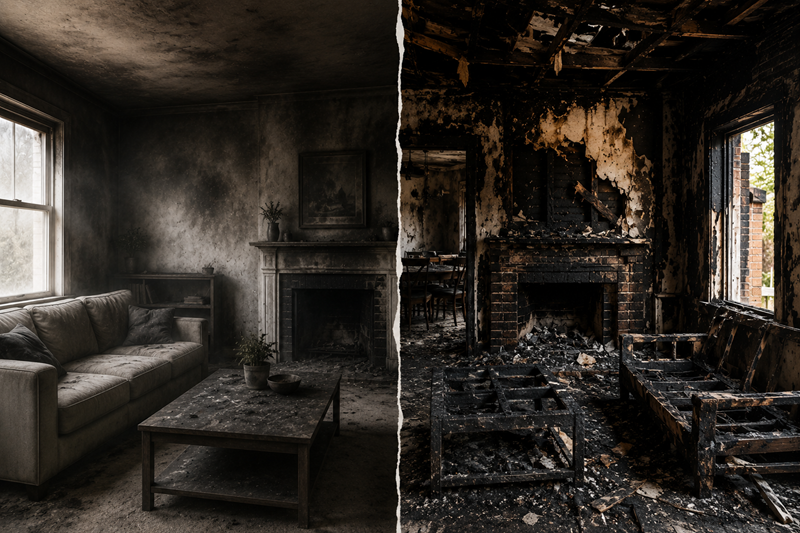
Most people use the terms “smoke damage” and “fire damage” interchangeably, but they are different problems that require different restoration methods. Understanding these differences can help property owners to know what to expect during the recovery process and why professional restoration is often necessary.
In this guide, we will explain smoke damage vs fire damage, the major differences between them, and how Utah Disaster Kleenup helps restore properties affected by fire-related disasters.
Understanding Fire Damage
Fire Damage means the destruction that results directly from flames and high heat. A fire that spreads through a property can damage structural components, personal belongings, electrical systems, and building materials.
The amount of damage a fire causes depends on the size of the fire, how long the fire burned, and what materials were involved. The usual signs of fire damage include:
- Burned walls, ceilings, and flooring
- Charred furniture and damaged personal belongings
- Melted electrical components and appliances
- Structural damage to the property
- Broken doors and windows
- Weakened materials and unsafe areas caused by fire exposure
Because fire can affect a property’s stability, a professional assessment is important before cleanup and repairs begin.
Understanding Smoke Damage
Smoke damage occurs when smoke particles and chemical residues spread throughout a property during a fire. Unlike flames, smoke does not remain limited to one area. It can travel through air ducts, walls, ceilings, and small openings, affecting rooms far away from where the fire started.
Smoke particles can settle on surfaces and soak into porous materials, creating stains, lingering odors, and long-term damage. Some common signs of smoke damage include:
- Lingering smoke odors throughout the property
- Black or gray soot marks on walls, ceilings, and surfaces
- Yellow or brown stains on walls and ceilings
- Smoke-affected fabrics, furniture, and personal belongings
- Corrosion on electronic devices and metal surfaces
- Poor indoor air quality caused by smoke particles and residue
Smoke damage isn’t always visible to the naked eye, so you often need a professional inspection to determine which areas are damaged.
Smoke Damage vs Fire Damage: Key Differences
Smoke and fire damage may occur during the same incident, but they affect properties differently. Understanding these key differences helps homeowners identify the right restoration approach and take timely action after a fire.
Source of Damage
Smoke Damage
Smoke damage occurs when materials burn and emit particles, gases, and residues. These little particles move around the property and land on surfaces, furniture, fabrics, and ventilation systems.
Even if the fire is in one room, smoke can spread throughout the whole building. This means that even if there’s no visible fire damage, professional cleaning and deodorizing may still be needed.
Fire Damage
Fire damage is caused by direct exposure to flames and extreme heat. When materials come into contact with fire, they may burn, melt, weaken, or become completely destroyed.
Fire damage is usually concentrated in areas where the flames had direct contact, although heat can also affect nearby materials and structures.
Visibility of Damage
Smoke Damage
Smoke damage is often hidden, making it difficult to detect. A room may look normal, but there may be smoke residue on walls, ceilings, furniture, and personal belongings.
If left untreated, smoke particles can cause discoloration, corrosion, and lingering odors over time. It is important to get it professionally cleaned early to prevent further damage.
Fire Damage
Fire damage is often easier to detect because the damage is visible. The property bears the marks of the flames—burn marks, charred materials, damaged structures, and destroyed belongings.
However, some fire-related issues, such as weakened structures or electrical problems, may require professional inspection to detect.
Impact on Property and Belongings
Smoke Damage
Smoke can impact nearly everything in a property. Smoke particles and odors cling to clothing, carpets, furniture, electronics, and personal effects.
Waiting to clean up can allow smoke residue to become acidic over time and damage some materials. Objects that appear salvageable will require specialized cleaning procedures to be properly restored.
For homeowners dealing with smoke-related issues, smoke damage restoration Utah services help remove soot, eliminate odors, and restore affected areas.
Fire Damage
Fire damage can destroy materials beyond repair. Walls, flooring, furniture, appliances, and other belongings may need to be replaced depending on the severity of the damage.
Fire can cause safety issues beyond visible destruction, including structural instability and electrical problems. Professionally trained restoration teams assess the property to determine what can be repaired and what must be replaced.
Restoration Process
Smoke Damage
Smoke restoration includes the removal of soot, the cleaning of surfaces, the improvement of air quality, and the removal of odors. Pros have specialized equipment and cleaning methods to remove smoke particles from affected areas.
The restoration process may consist of:
- Soot removal
- Air purification
- Odor neutralization
- Cleaning of affected belongings;
Smoke can get deep into materials, and regular household cleaning methods often won’t do.
For effective smoke damage cleanup Utah, professional restoration specialists use advanced techniques to restore properties after fire incidents.
Fire Damage
Fire restoration involves addressing the physical destruction caused by flames and heat. The process may include debris removal, structural repairs, rebuilding, and restoring damaged areas.
Fire restoration professionals also address secondary damage caused by firefighting efforts, such as water damage from extinguishing the fire.
For complete recovery after a fire emergency, fire damage restoration Utah experts provide services that cover everything from cleanup to reconstruction.
Health and Safety Concerns
Smoke Damage
Smoke residue can affect indoor air quality and may contain harmful chemicals from burned materials. Lingering smoke particles can continue affecting the environment if they are not professionally removed.
Proper cleaning and air filtration help create a safer indoor environment after smoke exposure.
Fire Damage
Fire damage can create immediate safety risks, including unstable structures, exposed wiring, and damaged building materials.
Before entering or restoring a fire-damaged property, professionals assess safety concerns and create a proper restoration plan.
Why Professional Fire and Smoke Restoration Is Important
Many property owners try to handle fire cleanup themselves, but smoke and fire damage often involve hidden problems that are difficult to identify without professional equipment.
Restoration experts understand how different materials react to fire, heat, soot, and smoke. They can determine which belongings can be restored and which materials need replacement.
Professional restoration helps with:
- Accurate damage assessment
- Safe cleanup
- Smoke and soot removal
- Odor elimination
- Property repairs
- Insurance assistance
When both types of damage occur together, professional fire and smoke damage repair Utah services provide a complete solution for restoring homes and businesses.
How Utah Disaster Kleenup Helps After Fire and Smoke Damage
Since 1974, Utah Disaster Kleenup has helped Utah homeowners and businesses recover from unexpected disasters. Fire damage restoration involves more than removing burned materials. Smoke, soot, odors, and hidden damage must also be addressed.
UDK provides comprehensive restoration services, including:
- Fire damage assessment
- Smoke & Soot Damage Cleanup
- Eliminate Odor
- Contents cleaning
- Structural repairs
- Total Restoration Services
They have an experienced team that works with property owners and insurance companies to streamline the recovery process and get properties back to normal as quickly as possible.
How to Remove Smoke Odor After a Fire
A smoke smell that remains after a fire usually means smoke particles are still trapped somewhere inside the property. These particles can hide in surfaces, fabrics, air ducts, carpets, furniture, and other porous materials.
The best way to eliminate smoke smell is to start at the source. Professional restoration involves the removal of the contaminated materials, cleaning of the affected surfaces, improving the airflow, neutralizing the odors and sealing the areas where smoke has gotten deep in.
Air fresheners do not cover up the smell or solve the problem. The smell comes back because the smoke particles that cause it are still there.
For smoke odor removal Utah homes and businesses can trust, Utah Disaster Kleenup has restored fire-damaged properties since 1974. Their fire damage restoration teams handle everything from soot cleanup through deodorization and rebuild, with direct insurance billing.
Smoke smell that will not disappear? Call UDK at (801) 515-3601 any hour for professional fire and smoke restoration assistance.
Frequently Asked Questions
Is smoke damage different from fire damage?

Yes. Fire damage results from direct exposure to flames and heat, while smoke damage occurs when smoke particles spread throughout a property, leaving behind residue and odors.
Can smoke damage happen without major fire damage?
Yes. A small fire can still cause significant smoke damage because smoke travels easily through a property, affecting areas away from the flames.
How long does smoke odor last after a fire?
Smoke odor can last for weeks, months, or longer if smoke particles remain trapped in materials. Professional odor removal helps eliminate the source of the smell.
Can damaged belongings be restored after smoke exposure?
Depending upon the extent of smoke damage and the material, many items can be restored. Professional cleaning methods can help to preserve furniture, clothing, and other items.
Should I clean fire damage myself?
It is best to contact professionals for significant fire damage. Fire-damaged properties may have hidden safety risks, and improper cleaning can make restoration more difficult.
How quickly should fire and smoke restoration begin?
Restoration should begin as soon as possible after a fire. Quick action helps reduce additional damage and increases the chances of restoring affected belongings.