
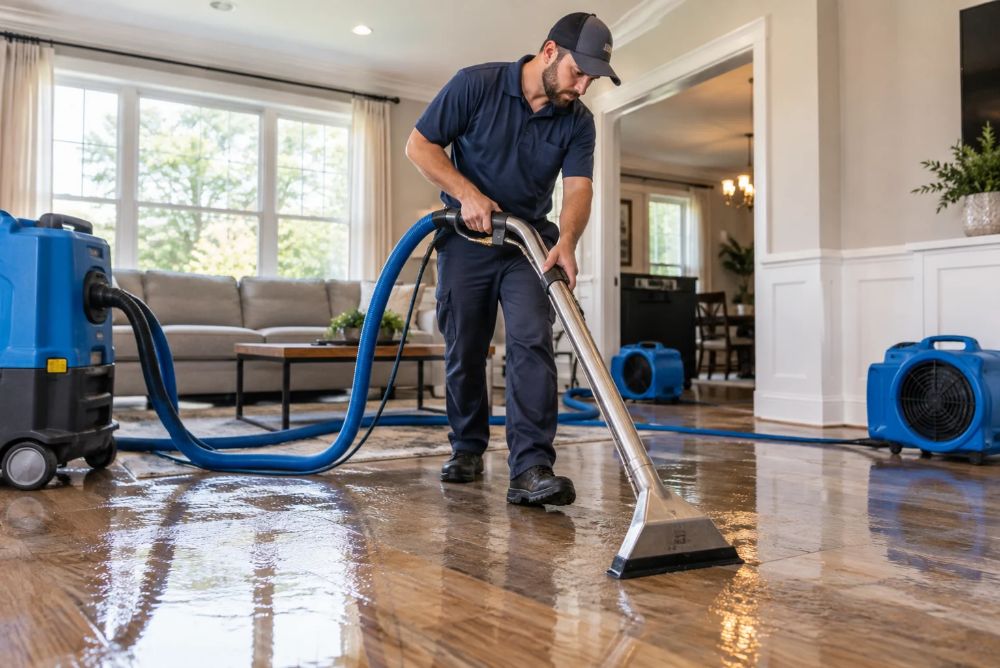
How does water extraction work comes down to powered suction equipment, moisture detection technology, and a clear step-by-step process designed to remove water fast while protecting the property from further damage. It is not simply a larger version of a household vacuum. Professional extraction uses pumps, wands, and moisture meters together to pull water out of carpets, flooring, and other materials as completely as possible.
What Is the Basic Science Behind Water Extraction?
Water extraction relies on suction and vacuum pressure to lift water out of carpets, flooring, and other absorbent materials. Powerful pumps create negative pressure that pulls water into a collection tank or hose system, separating it from the surfaces it has soaked into.
The deeper water has penetrated a material, the more suction power and time it takes to extract it fully. This is why professional-grade equipment outperforms household tools, especially on porous materials like carpet padding.
What Are the Steps in the Extraction Process?
Water extraction follows a general sequence, though the specific equipment used shifts depending on water depth and material type. Each step builds on the last to remove as much moisture as possible before drying begins.
- Assess the water category and volume. Technicians identify whether the water is clean, gray, or contaminated black water, since this affects safety protocols and equipment choice.
- Remove bulk standing water. For water more than a couple of inches deep, submersible pumps handle bulk removal first, moving large volumes quickly through a discharge hose.
- Extract water from carpets and flooring. Truck-mounted or portable extraction units use high-powered suction wands to pull remaining moisture from carpets, padding, and hard flooring.
- Check moisture levels. Moisture meters measure how much water remains in flooring and nearby materials, guiding whether more extraction is needed.
- Transition to drying and dehumidification. Industrial air movers and dehumidifiers take over to remove remaining moisture from the air and materials.
Our water damage restoration team follows this sequence on most projects, adjusting equipment and pace based on how much water is present.
What Equipment Is Used in Water Extraction?
Different situations call for different tools, and knowing the basics explains why professional equipment gets results faster than household alternatives.
| Equipment Type | Best Used For | Water Depth Handled |
| Wet dry vacuum | Small spills, minor flooding | Less than an inch |
| Submersible pump | Deep standing water | Several inches or more |
| Truck-mounted extractor | Carpet and large area extraction | Surface and saturated materials |
| Portable extraction unit | Tight spaces, upper floors | Surface and saturated materials |
| Trash pump | Debris-filled or muddy water | Several inches or more |
What Makes Modern Extraction Equipment More Efficient?
Extraction technology has improved significantly over the years, and a few advances stand out among current equipment.
- Truck-mounted units generate far stronger suction than older portable models
- Moisture sensors give technicians real-time data instead of relying on guesswork
- Faster pump systems reduce the window between flooding and full extraction
- Improved hose and wand designs reach tighter spaces without sacrificing suction power
These improvements mean less water sits in a property, which directly reduces the risk of mold and structural damage.
What Mistakes Happen During DIY Water Extraction?
A few missteps tend to make DIY extraction less effective and sometimes unsafe.
- Using a standard vacuum not rated for wet conditions, which can damage the equipment or create an electrical hazard
- Stopping extraction too early, leaving moisture trapped beneath carpet or flooring
- Ignoring water that has spread to adjoining rooms or behind baseboards
- Skipping moisture testing, which means hidden dampness goes unnoticed until mold appears
When Does Professional Extraction Make the Biggest Difference?
Minor spills are often manageable with household tools, but once water covers a large area or has sat for more than an hour, professional extraction becomes the safer, faster route. Our flood damage restoration team combines extraction with the drying and repair work needed to fully resolve the damage, not just the visible water.
Trusted Water Extraction Across Utah
Call UDK provides fast, professional water extraction for homeowners and businesses across Draper, Layton, Park City, and Hurricane. Our technicians arrive with the equipment needed to handle everything from minor leaks to major flooding. You can view our service locations to see if we cover your area.
Understanding how does water extraction work helps you know what to expect when a professional crew arrives and why speed and equipment quality matter. If you are dealing with a leak or flooding, contact Call UDK for fast help.
Frequently Asked Questions
How long does water extraction typically take?

Extraction usually takes a few hours for most residential situations, though larger floods or extensive carpeted areas can take longer to fully clear before drying begins.
Can water extraction remove water from hardwood floors?
Yes, though hardwood requires careful handling since trapped moisture can cause warping. Technicians often use specialized techniques to extract water without further damaging the wood.
Is water extraction handled differently for contaminated water?
Yes. Gray or black water requires additional safety precautions, protective equipment, and often different disposal methods compared to clean water extraction.
Does water extraction alone prevent mold?
Not entirely. Extraction removes standing water, but drying and dehumidification are still necessary to eliminate the moisture that allows mold to grow afterward.
What is the difference between a wet vacuum and a submersible pump?
Wet vacuums handle shallow water and small spills, while submersible pumps are built for deeper standing water and move much larger volumes per minute.