
5 Signs Your Mattress Needs Professional Cleaning After Water Damage
Published
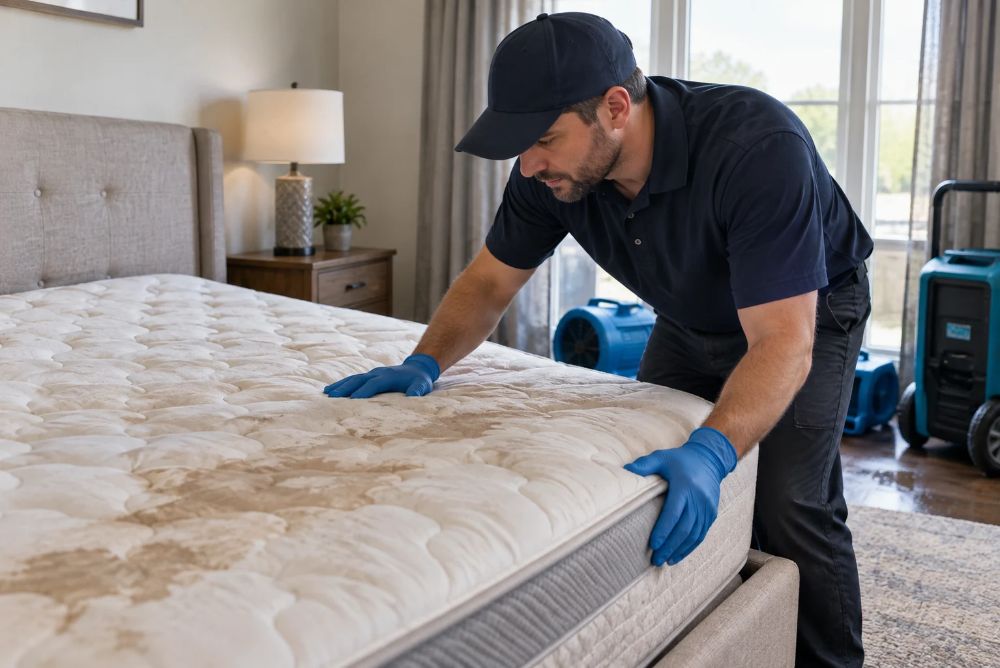
Mattress cleaning after water damage matters more than most homeowners realize, since a mattress absorbs moisture deep into its layers and can hide mold long before it becomes visible on the surface. A wet mattress left unaddressed for more than a day or two often develops odor, staining, or mold growth that basic drying cannot fix. Knowing the signs below helps you decide whether professional cleaning can save the mattress or whether replacement is the safer choice.
Why Are Mattresses So Vulnerable to Water Damage?
Mattresses are made of layered foam, fabric, and sometimes natural fibers, all of which absorb moisture like a sponge. Unlike a hard floor or countertop, water works its way deep into the padding, where it is nearly impossible to fully dry without specialized equipment.
That trapped moisture creates conditions favorable to mold and bacteria within 24 to 48 hours, according to guidance commonly cited by restoration industry organizations, which is why acting quickly matters when a mattress gets wet.
Sign 1: A Persistent Musty or Sour Smell
A musty or sour smell that lingers even after the mattress appears dry on the surface usually means moisture is still trapped inside. This odor is often the earliest warning sign, showing up before any visible mold does.
Sign 2: Visible Staining or Discoloration
Yellow, brown, or dark patches on the mattress surface usually mean water has soaked through the fabric and into the padding underneath. The larger or darker the stain, the more moisture likely remains trapped inside the layers below.
Sign 3: A Sagging or Spongy Feel
Pressing down on the affected area and feeling it give more than it should, or noticing it does not spring back the way it used to, signals that internal materials have started breaking down from moisture exposure.
Sign 4: Visible Mold Spots
Small black, green, or white spots anywhere on the mattress, especially along seams or the underside, indicate mold has already started growing. At this stage, replacement is usually the safer option rather than cleaning.
Sign 5: Allergy Symptoms After Sleeping
Unexplained sneezing, congestion, or skin irritation after sleeping can point to mold or bacteria growth inside a water-damaged mattress, even before anything looks or smells obviously wrong.
Should You Clean or Replace the Mattress?
Not every wet mattress needs to go straight to the curb, but knowing the difference matters for both health and budget.
| Situation | Cleaning May Work | Replacement Recommended |
| Clean water, addressed within 24 hours | Yes | No |
| Contaminated water from flooding or sewage | No | Yes |
| Minor surface staining, no odor | Yes | No |
| Visible mold growth | No | Yes |
| Sagging or spongy texture | Rarely | Yes |
If the water involved was clean, such as from a burst supply line, and you act quickly, professional cleaning has a real chance of saving the mattress. Contaminated water almost always means replacement is the safer choice.
What Mistakes Do Homeowners Make?
A few missteps tend to make the situation worse after a mattress gets wet.
- Letting a wet mattress sit for more than a day before addressing it
- Using a household fan alone, which rarely dries deep enough to prevent mold
- Standing the mattress upright without proper drying, which can trap moisture further inside
- Sleeping on a mattress that smells musty, assuming it will air out on its own
- Attempting to clean sewage-contaminated bedding instead of replacing it entirely
What Does Professional Mattress Cleaning Involve?
A certified restoration team assesses the extent of moisture penetration, then uses specialized drying equipment and antimicrobial treatments to address both visible and hidden dampness. This goes beyond air drying at home, since professional equipment reaches moisture trapped deep in the foam that household methods cannot touch.
If your mattress was affected as part of a larger flooding or leak situation, pairing mattress care with full water damage restoration addresses both the furniture and the underlying moisture source together.
What If Mold Has Already Spread?
If mold has developed on the mattress, it is worth checking nearby areas too, since airborne spores can spread to carpeting, walls, or other furniture in the room. Our mold remediation services can address any spread beyond the mattress itself.
Trusted Water Damage Response Across Utah
Call UDK has helped homeowners across Draper, Layton, Park City, and Hurricane recover from water damage, including furniture and bedding, for decades. Our technicians assess what can be saved and what needs replacement, giving you a clear answer instead of guesswork. You can view our service locations to see if we cover your area.
Knowing when mattress cleaning after water damage can save your mattress, and when it cannot, protects both your health and your budget. If you have a water-damaged mattress, contact Call UDK for an assessment.
Frequently Asked Questions
Can a wet mattress be saved after flooding?

It depends on the water source and how quickly you act. Clean water addressed within 24 hours has the best chance, while contaminated water usually means replacement.
How long does it take for mold to grow on a wet mattress?
Mold can begin developing within 24 to 48 hours of water exposure, which is why prompt drying or professional cleaning matters.
Is it safe to sleep on a mattress after minor water exposure?
If the mattress was dried quickly and shows no odor, staining, or texture changes, it is often safe. When in doubt, a professional assessment offers peace of mind.
Does homeowners insurance cover mattress replacement after water damage?
Many policies covering sudden water events, such as burst pipes, include personal property like mattresses, though coverage varies by policy and cause of damage.
Can I just dry my mattress with fans and skip professional cleaning?
Fans help with surface moisture, but they rarely reach deep enough to fully dry foam or padding, leaving hidden dampness that can still lead to mold.