
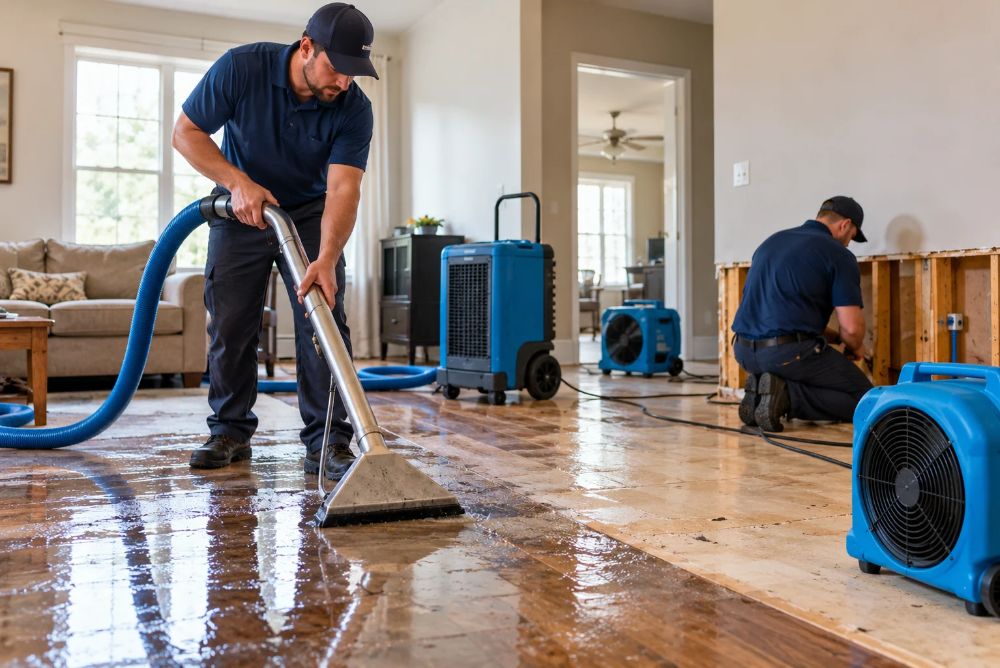
Water extraction vs. restoration describes two connected but distinct stages of recovering from a flood or leak, not two competing services. Extraction is the immediate removal of standing water, while restoration is the complete process of drying, repairing, and returning a property to its pre-damage condition. Most water damage situations require both, performed in sequence rather than as separate choices.
What Is Water Extraction?
Water extraction is the physical removal of standing or pooled water using pumps, wet vacuums, and specialized equipment. It focuses on removing bulk water before it spreads further or soaks deeper into materials.
Extraction typically begins within the first few hours after a flood, burst pipe, or major leak. The goal is straightforward: stop water from sitting on surfaces long enough to damage flooring, drywall, and other building materials.
What Is Water Damage Restoration?
Water damage restoration is the broader process that follows extraction, covering everything needed to return a property to its pre-damage condition. This includes drying remaining moisture, cleaning and sanitizing affected areas, repairing damaged materials, and confirming the space is safe.
Restoration takes longer than extraction, often days rather than hours, since it addresses hidden moisture and structural repairs that extraction alone cannot resolve. Our water damage restoration team manages this entire process from initial drying through final repairs.
How Do Extraction and Restoration Compare?
A side-by-side comparison makes the distinction between these two stages easier to see.
| Category | Water Extraction | Water Damage Restoration |
| Purpose | Remove standing water quickly | Fully repair and dry the property |
| Timeline | Hours | Days to weeks |
| Equipment | Pumps, wet vacuums | Dehumidifiers, air movers, repair tools |
| Scope | Bulk water removal only | Drying, cleaning, repairs, and testing |
| When it is used | Immediately after flooding | After extraction, throughout recovery |
Extraction serves as the emergency response, while restoration is the complete recovery plan that follows.
How Do Extraction and Restoration Work Together?
Extraction and restoration are sequential steps in the same recovery process, not separate options to choose between. Most water damage situations require both to fully resolve the underlying moisture problem.
- Extraction removes the bulk water so drying equipment can work effectively.
- Drying and dehumidification target the moisture that extraction alone leaves behind.
- Cleaning and sanitizing address any contamination in the affected materials.
- Repairs replace damaged drywall, flooring, or other materials that could not be salvaged.
- Final inspection confirms the property meets safe, dry standards before the project closes.
Stopping after extraction and assuming the job is done is one of the most common mistakes homeowners make, since visible water disappearing does not mean the moisture problem is solved.
When Do You Need Extraction Only Versus Full Restoration?
Small, contained situations, such as a minor overflow cleaned up within minutes, may only require basic extraction. Once water sits for more than an hour or two, soaks into flooring, or spreads to multiple rooms, full restoration becomes necessary to prevent mold and structural issues.
If you are unsure which situation applies, a professional inspection is the most reliable way to find out. Our flood damage restoration team can assess the scope quickly and identify exactly what the property needs.
What Mistakes Happen When Choosing Between the Two?
A few misunderstandings tend to complicate recovery after water damage.
- Assuming extraction alone solves the problem, when hidden moisture often remains behind walls or under flooring
- Waiting too long between extraction and restoration, giving mold time to develop
- Hiring separate companies for each step, which can slow communication and scheduling
- Not realizing insurance often covers both services as part of one claim
- Underestimating how much moisture can hide after visible water is gone
Why Does Choosing One Provider for Both Services Matter?
Hiring a single company for extraction and restoration keeps the process moving without the delays that come from switching providers mid-project. It also means the same team documents damage consistently for your insurance claim, from initial extraction through the final repair.
Trusted Water Extraction and Restoration Across Utah
Call UDK provides both water extraction and full restoration services for homeowners and businesses across Draper, Layton, Park City, and Hurricane. Our technicians handle the entire process under one roof, so you never have to coordinate between separate companies. You can view our service locations to see if we cover your area.
Understanding water extraction vs. restoration helps you know exactly what your property needs instead of guessing during a stressful moment. If you are dealing with a leak or flooding, contact Call UDK to discuss the right approach for your situation.
Frequently Asked Questions
Is water extraction the same as water mitigation?

Not exactly. Mitigation is a broader term that includes extraction along with initial steps to prevent further damage, while restoration covers the complete repair process that follows.
How quickly does water extraction need to happen?
Extraction should start as soon as possible, ideally within hours, since standing water spreads and soaks into materials the longer it sits untouched.
Does insurance typically cover both extraction and restoration?
Most policies covering a sudden water event, such as a burst pipe, cover both services under the same claim, though coverage details vary by policy.
Can I handle water extraction myself and hire a company only for restoration?
For minor situations, you can extract with a wet vacuum, though larger volumes of water often require professional equipment to remove quickly and completely.
How do I know if my property needs restoration after extraction?
If water sat for more than an hour, soaked into flooring or drywall, or affected more than one room, restoration is almost always necessary beyond basic extraction.