
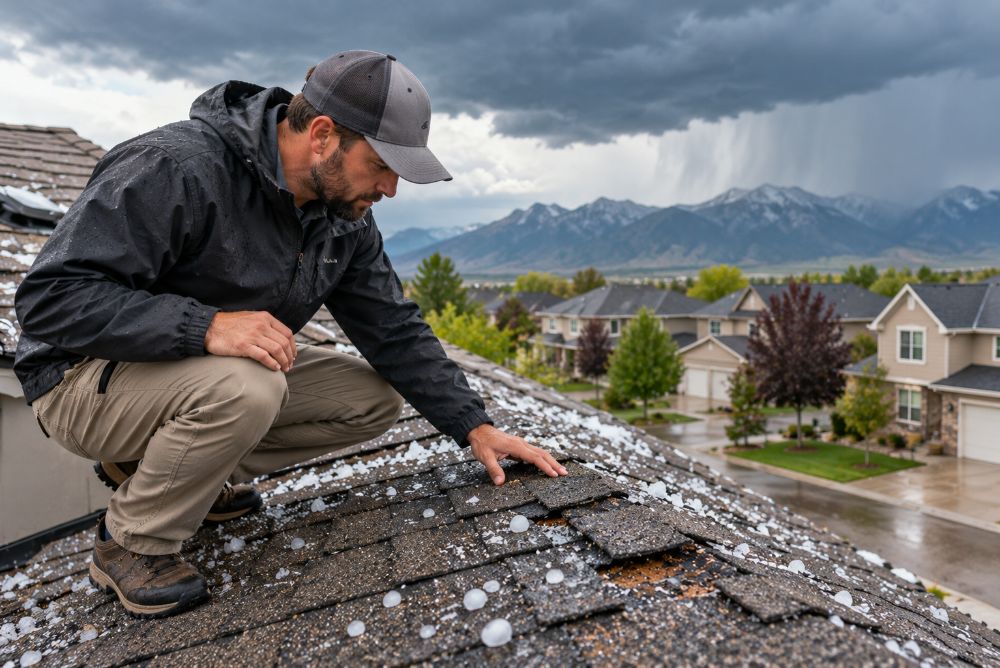
Hail damage Utah roofs experience often starts small, with bruised shingles or dented metal that homeowners never notice from the ground. Utah’s fast-moving summer thunderstorms bring hail that can weaken roofing materials in seconds, and the damage often stays hidden until a leak develops later. Knowing how hail actually affects a roof helps homeowners catch problems early and avoid costlier repairs down the road.
How Does Hail Actually Damage a Roof?
Hail damages a roof through repeated impacts, which bruise or crack materials even when the hailstones are relatively small. The damage often breaks down protective layers rather than creating an obvious hole or tear.
Even hail around one inch in diameter can knock granules loose from asphalt shingles or dent metal roofing, especially when paired with strong wind. Impact force, hail size, and the angle hailstones strike the roof all influence how much damage results. Repeated impacts weaken the shingle’s protective coating and expose the underlayment below to sun and moisture, which is typically where leaks eventually begin.
How Do Different Roofing Materials Respond to Hail?
Roofing material plays a major role in how visible hail damage becomes, with some materials showing clear signs and others hiding damage almost completely.
| Roofing Material | Common Hail Damage | Visibility From the Ground |
| Asphalt shingles | Granule loss, bruising, cracking | Often hidden until closer inspection |
| Metal roofing | Dents and dimpling | Usually visible but sometimes only cosmetic |
| Tile roofing | Cracked or shattered tiles | Fairly visible after larger hail |
| Wood shake | Splitting and cracking | Can be subtle depending on wood condition |
Asphalt shingles remain the most common roofing material across Utah, which makes professional inspection especially important after a hailstorm since granule loss rarely stands out from a quick glance.
What Are the Signs of Hidden Hail Damage?
Hail damage often stays hidden even after a close look from the ground, which is why checking specific indicators matters more than a visual scan alone. Several signs point to impact damage that needs a closer inspection.
- Dark spots or bruising on asphalt shingles where granules have been knocked loose
- Small dents in gutters, vents, or metal flashing, which often mirror similar impact on the roof itself
- Granules collecting in gutters or at the base of downspouts
- Cracked or chipped tiles on tile roofing
- Soft spots felt when walking the roof, which can signal deeper structural impact
Why Does Utah’s Storm Season Create Extra Risk?
Utah’s summer months bring fast-developing thunderstorms that often include hail, particularly along the Wasatch Front and higher-elevation areas. According to the National Weather Service, severe thunderstorm warnings are issued when hail reaches one inch in diameter or larger, a size capable of causing real roof damage. These storms often develop with little advance warning.
Combined with intense high-altitude sun exposure that already stresses roofing materials year-round, a hailstorm can accelerate wear that would otherwise take years to show up.
What Mistakes Do Homeowners Make After a Hailstorm?
Homeowners commonly assume no damage occurred simply because the roof looks fine from the ground, which delays repairs and raises long-term costs. A few other missteps make hail damage worse.
- Waiting weeks or months to schedule a professional inspection
- Climbing onto the roof without proper safety equipment or training
- Filing an insurance claim without photo documentation of visible damage
- Choosing a contractor who pressures for an immediate decision before a full inspection
What Should I Do Immediately After a Hailstorm?
The right response after a hailstorm focuses on documentation and a timely inspection, not climbing onto the roof yourself. Acting quickly protects both your property and your insurance claim.
- Check your yard, gutters, and outdoor fixtures for visible hail impact
- Photograph any damage to vehicles, siding, or outdoor equipment as early evidence
- Schedule a professional roof inspection, ideally within a few days of the storm
- Contact your insurance provider to begin documenting the claim
- Avoid climbing onto the roof yourself, since hidden damage can weaken structural stability
When Should I Call a Professional Inspector?
Schedule a professional inspection after any storm with notable hail, even if the roof appears undamaged from below. Trained technicians can identify bruising, granule loss, and hidden cracks that a casual glance misses.
If hail damage led to a leak or water intrusion, pairing a roof inspection with prompt water damage restoration helps prevent secondary issues like mold from developing behind walls or ceilings.
Storm Damage Support Across Utah
Call UDK provides storm damage restoration services for homeowners across Draper, Layton, Park City, and Hurricane, assessing both visible and hidden damage after severe weather. Our team works directly with insurance providers throughout the process. You can view our service locations to see if we cover your area.
Understanding hail damage Utah roofs commonly face helps you catch problems early instead of discovering a leak months later. If your roof took a direct hit or you simply want peace of mind after a storm, contact Call UDK to schedule an assessment.
Frequently Asked Questions
How small does hail need to be to damage a roof?

Hail around one inch in diameter can bruise asphalt shingles or dent metal roofing, especially when combined with strong wind during the storm. Smaller hail can still cause cosmetic wear over repeated storms.
Can hail damage go unnoticed for months?
Yes. Bruised or cracked shingles often don’t leak right away, but exposed underlayment can lead to water intrusion weeks or months after the original storm.
Does homeowners insurance typically cover hail damage to roofs?
Many standard policies cover hail damage, though coverage details and deductibles vary by provider and policy. Review your specific policy or speak with your insurer for the clearest answer.
How long after a hailstorm should I schedule a roof inspection?
Scheduling an inspection within a few days of the storm is ideal, since early documentation supports your insurance claim and helps catch damage before it worsens further.
Is it safe to inspect my own roof after a hailstorm?
It is generally not recommended. Hail can hide structural weaknesses, so a trained professional should handle the inspection instead.