
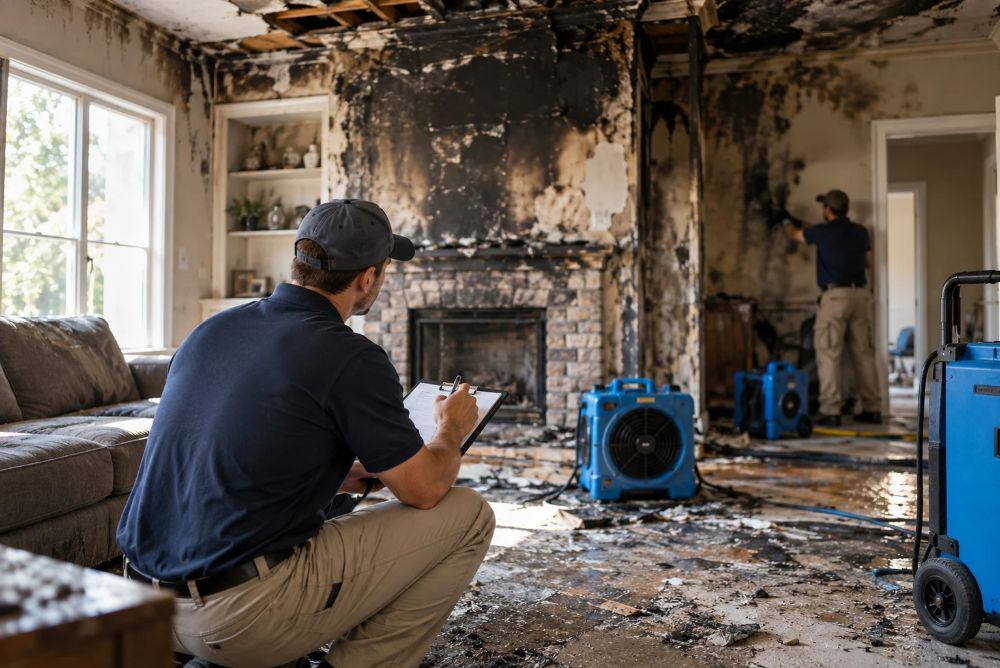
Fire damage restoration timelines generally range from a few days for minor smoke damage to several months for severe structural fires. The exact timeline depends on the fire’s size, how much water was used to extinguish it, and whether structural rebuilding is needed. Understanding these factors helps homeowners set realistic expectations before restoration begins.
What Determines the Restoration Timeline?
The timeline for fire damage restoration depends mainly on severity, the extent of smoke and water damage, and how quickly the project starts. Insurance approval and contractor scheduling can also extend the process beyond the physical repair work itself.
Several specific factors shape how long a project takes:
- Size of the fire. A single-room fire restores much faster than one that spread through multiple rooms or floors.
- Water damage from firefighting efforts. Heavy water use adds drying time before repairs can begin.
- Structural severity. Framing, roof, or load-bearing wall damage extends the timeline significantly compared to surface-level smoke damage.
- Insurance and permitting. Waiting on claim approval or building permits can add days or weeks before major work starts.
Fire Damage Restoration Timeline by Severity
Restoration companies generally group projects into three broad categories based on severity. This table offers a general reference, since every property and fire situation is different.
| Damage Level | What It Typically Involves | General Timeline |
| Minor smoke damage | Odor removal, surface cleaning, minimal structural impact | Several days to about a week |
| Moderate fire damage | Partial room damage, some drywall or flooring replacement | A few weeks |
| Severe structural damage | Major framing, roof, or multi-room damage requiring rebuild | Several months or longer |
What Happens During Each Stage of Restoration?
Fire damage restoration follows a general sequence, though the time spent on each stage varies by severity. Each phase builds on the last, starting with assessment and ending with a final inspection.
- Inspection and assessment: A technician evaluates the extent of fire, smoke, and water damage and outlines a restoration plan.
- Securing the property: Boarded windows, tarps, and shut off utilities protect the property from further damage.
- Water removal and drying: Crews extract and dry any water used during firefighting to prevent mold growth.
- Smoke and soot cleanup: Specialized cleaning agents remove residue from affected surfaces without spreading it further.
- Odor removal: Treatments like thermal fogging address embedded smoke odor rather than masking it.
- Structural repairs: Damaged framing, drywall, flooring, or roofing gets rebuilt to restore the property.
- Final walkthrough: A last inspection confirms the work meets standards before the property is ready for use.
Our fire damage restoration team follows this general sequence on most projects, adjusting the pace based on the scope of the damage.
How Does Insurance Affect the Timeline?
Insurance approval often affects the overall timeline more than the physical repair work itself. Waiting on adjuster visits and claim decisions can delay major repairs by days or weeks.
A restoration company experienced with insurance claims can help document damage clearly, which may help the approval process move more smoothly. Reviewing your specific policy or speaking with your provider gives the clearest picture of coverage and expected timing.
What Can Homeowners Do to Avoid Delays?
A few practical steps help keep a restoration project moving without unnecessary setbacks.
- Contact a certified restoration company as soon as it is safe to do so
- Respond promptly to insurance adjuster requests and documentation needs
- Ask for a written timeline before restoration work begins
- Avoid attempting DIY soot cleanup, which can spread residue and add time later
If water damage played a role in the fire, pairing fire restoration with proper water damage restoration helps prevent mold from developing during drying. Lingering smoke odor is also a common concern after cleanup, and our smoke odor removal services address odor that basic cleaning often misses.
Fire Damage Restoration Across Utah
Call UDK has served homeowners and businesses across Draper, Layton, Park City, and Hurricane for decades, managing fire damage restoration projects of varying severity. You can view our service locations to see if we cover your area.
Understanding how long does fire damage restoration take helps you plan realistically during a stressful time. If your property needs an assessment, contact Call UDK to discuss your specific fire damage restoration timeline.
Frequently Asked Questions
Can fire damage restoration be completed in one week?

Minor smoke damage without significant structural impact can often be resolved within a week. Moderate to severe fires generally take longer, especially when reconstruction is involved.
Does water damage from firefighting extend the restoration timeline?
Yes. Firefighting water requires extraction and drying before repairs can proceed, which adds time to the overall project and helps prevent mold from developing.
How does insurance approval affect how long restoration takes?
Waiting on adjuster visits and claim approval before major repairs begin is one of the most common reasons a restoration timeline extends beyond initial estimates.
Is it faster to hire a fire restoration specialist instead of a general contractor?
Fire restoration specialists understand how soot, smoke, and water interact, which often prevents the redo work that can slow down a general contractor unfamiliar with fire-specific damage.
How soon after a fire should restoration begin?
Restoration should begin as soon as fire officials declare the property safe, since early water extraction and smoke cleanup help limit secondary damage like mold.