
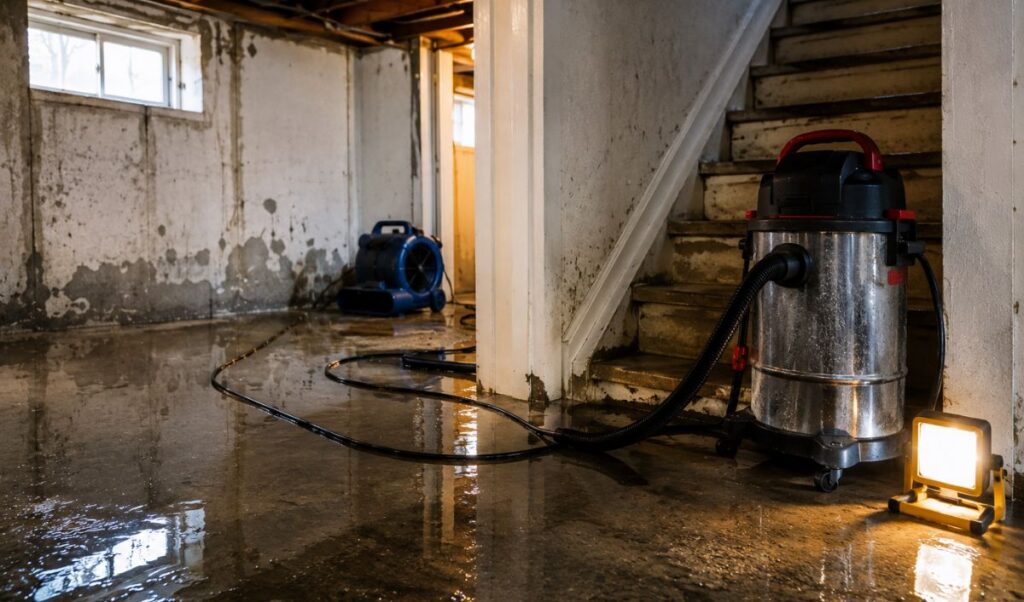
You’ve pumped out the water, the floor looks clear, and the obvious question hits: how long until this is actually dry and I can stop worrying? It’s the right question, and the honest answer surprises most homeowners. A basement that looks dry on the surface can still be soaked inside its walls and floor, quietly feeding mold while you assume the worst is over.
So let’s set realistic expectations. Here’s how long drying a flooded basement actually takes, what changes that timeline, and why “looks dry” and “is dry” are two very different things.
Quick Answer
Most flooded basements take about 3 to 5 days to dry out with professional equipment, though the full range runs from 24 hours for minor moisture to two weeks or more for severe or contaminated flooding. The timeline depends on how much water entered, how long it sat, what materials got wet, and how fast drying began. Removing the standing water is only the first step. The structure underneath takes far longer, which is why professional drying with extraction, air movers, and dehumidifiers matters.
The Realistic Drying Timeline
There’s no single number, but there is a realistic range. For most basement floods handled professionally, the structure dries in 3 to 5 days. Minor moisture can clear in 24 to 48 hours, while severe flooding that saturates drywall, framing, and subfloor can take one to two weeks or longer.
The gap between those numbers comes down to one thing: how much moisture soaked into materials, not just how much water pooled on the floor. An inch of clean water mopped up within hours is a very different job from six inches of contaminated water that sat for two days.
It’s worth knowing what the professionals are actually aiming for. A basement is considered dry when its materials return to normal moisture levels and relative humidity sits around 40 to 50 percent. That’s confirmed with meters, not when the floor merely feels dry to the touch. That distinction is the whole reason drying takes days rather than hours.
What Affects How Long It Takes
Several factors push that timeline shorter or longer, and understanding them helps you set expectations for your specific situation.
The Amount and Type of Water
Volume matters, but contamination matters more. Clean water from a supply line dries fastest. Gray water adds cleaning steps. Category 3 “black water,” from sewage or floodwater that crossed the ground, requires disinfecting and the removal of porous materials, which extends the timeline significantly.
How Long It Sat Before Drying Began
This is the factor you can actually control. Starting extraction within the first 24 hours can be the difference between a two-day job and a two-week one. The longer water sits, the deeper it wicks into drywall, wood, and concrete, and the more it has to be coaxed back out. If you’ve already called Utah Disaster Kleenup or another professional team, fast response is exactly why it helps.
Materials and Construction
Different materials hold water very differently. A few that slow things down:
- Drywall wicks water upward and, once saturated, usually has to be cut out rather than dried
- Carpet and padding trap moisture and often can’t be salvaged after a real flood
- Block-wall foundations hold water inside their hollow cores far longer than poured concrete
- Insulation behind wet walls stays damp and typically needs removal
Temperature and Humidity
Drying is really just moving moisture into the air and then removing it. Cold air holds less moisture, so a chilly basement dries more slowly, and Utah’s humidity swings affect the pace too. This is why professional dehumidifiers, which control the air regardless of weather, dry far faster than open windows and box fans.
The Stages of Drying a Basement
Proper drying isn’t one action; it’s a sequence, and each stage builds on the last. Knowing the steps helps you see why the clock runs the way it does.
Step 1: Water Extraction
First, every bit of standing water comes out, using pumps and truck-mounted or portable extractors. This happens fast, often within the first hours, but it’s only the beginning. Most of the moisture is still trapped in materials at this point.
Step 2: Removing Unsalvageable Materials
Next, what can’t be dried comes out: saturated carpet padding, the lower section of soaked drywall, and ruined insulation. Removing both protects your health and speeds drying, since there’s less waterlogged material left to dry.
Step 3: Structural Drying
Now the real time investment begins. Air movers create high-velocity airflow across surfaces while commercial dehumidifiers pull moisture from the air, creating a cycle that draws water out of framing, concrete, and remaining drywall. This is the multi-day phase, and it’s where the bulk of the 3-to-5-day estimate comes from.
Step 4: Monitoring and Verification
Throughout drying, technicians check materials with moisture meters and track humidity daily, adjusting equipment as readings improve. The job isn’t done when things look dry; it’s done when the numbers confirm it. If you want a sense of what a full professional process involves, our Water Damage Restoration Utah team follows this exact monitored sequence on every job.
Why You Can’t Just Wait It Out
It’s tempting to set up a couple of household fans, crack a window, and let nature handle the rest. With a real basement flood, that approach quietly causes more damage than it prevents.
The problem is hidden moisture. Water hides behind walls, under flooring, and inside concrete, where surface air never reaches. A basement can feel dry while its materials stay saturated for weeks, and that trapped dampness is exactly what mold needs. Mold can begin growing within 24 to 48 hours, long before slow natural drying finishes the job.
Natural drying also can’t verify itself. Without moisture meters, you’re guessing, and a wrong guess means sealing dampness inside your walls to resurface later as mold, warping, or rot. Professional drying is faster and confirmable, which is why it’s worth the call for anything beyond a minor, clean-water spill.
Frequently Asked Questions
How long does a flooded basement take to dry on its own?

Far longer than most people expect, often several weeks, and even then moisture frequently stays trapped inside walls and concrete. Natural drying also can’t be verified, so dampness lingers out of sight and invites mold. For anything beyond a minor clean-water spill, professional drying is dramatically faster and safer.
Is my basement dry once the standing water is gone?
No, and this is the most common and costly misunderstanding. Removing standing water is only the first step; most of the moisture is absorbed into drywall, subfloor, framing, and concrete. Those materials can take days of structural drying to release that water, even after the floor looks completely clear.
How fast does mold grow in a wet basement?
Mold can begin growing within 24 to 48 hours of materials staying wet. That short window is the single biggest reason to start professional drying immediately rather than waiting to see if it dries on its own. The faster moisture comes out, the lower your risk of a mold problem on top of the water damage.
Can I speed up the drying process myself?
You can help by removing standing water quickly, improving airflow, and running a dehumidifier, but household equipment can’t match the extraction and structural drying professionals use. For a small, clean spill, DIY may be enough. For a true flood, especially contaminated water, professional drying prevents the hidden moisture that turns into bigger problems.
How do professionals know when the basement is actually dry?
They measure it. Technicians use moisture meters on materials and track relative humidity, aiming for normal moisture levels and roughly 40 to 50 percent humidity. The drying equipment stays in place until those readings confirm the structure is dry, rather than relying on how surfaces look or feel.
Should I call a professional or handle it myself?
For minor, clean-water moisture caught immediately, careful DIY drying can work. For significant flooding, contaminated water, or any water that sat for more than a day, a professional team is the safer choice. They dry faster, remove what can’t be saved, verify the result, and document everything for your insurance claim.
The Bottom Line on Drying Time
For most flooded basements, plan on 3 to 5 days of professional drying, with minor cases faster and severe or contaminated ones running well past a week. The single biggest variable is how quickly drying begins, because every hour water sits, it soaks deeper and raises the mold risk. “Looks dry” is never the finish line; verified-dry is.
If your basement has flooded, the smartest move is to start professional drying fast. Our team has helped Utah families dry out and restore flooded basements since 1974, and we’re available around the clock. Call us anytime at (801) 553-1010 to get the process started today.